
A wedding is a time to celebrate the union of two people in love. The BA (Hons) Acting students at Manchester School of Theatre remind us that it is not only the joining of two people but also the bringing together of families. On Friday, 8th November 2024 I had the pleasure of watching a production of A Respectable Wedding by Bertolt Brecht, translated by Rory Bremner and directed by Deborah Yhip. The production transforms one of Brecht’s earliest plays into an energetic, recognisable, and culturally relevant event. Although this review cannot fully reconstruct the emotions, passions, and intensities of the actors, I will try to do justice by reflecting on the compromise of marriage, which was endearingly explored within this one-act play.
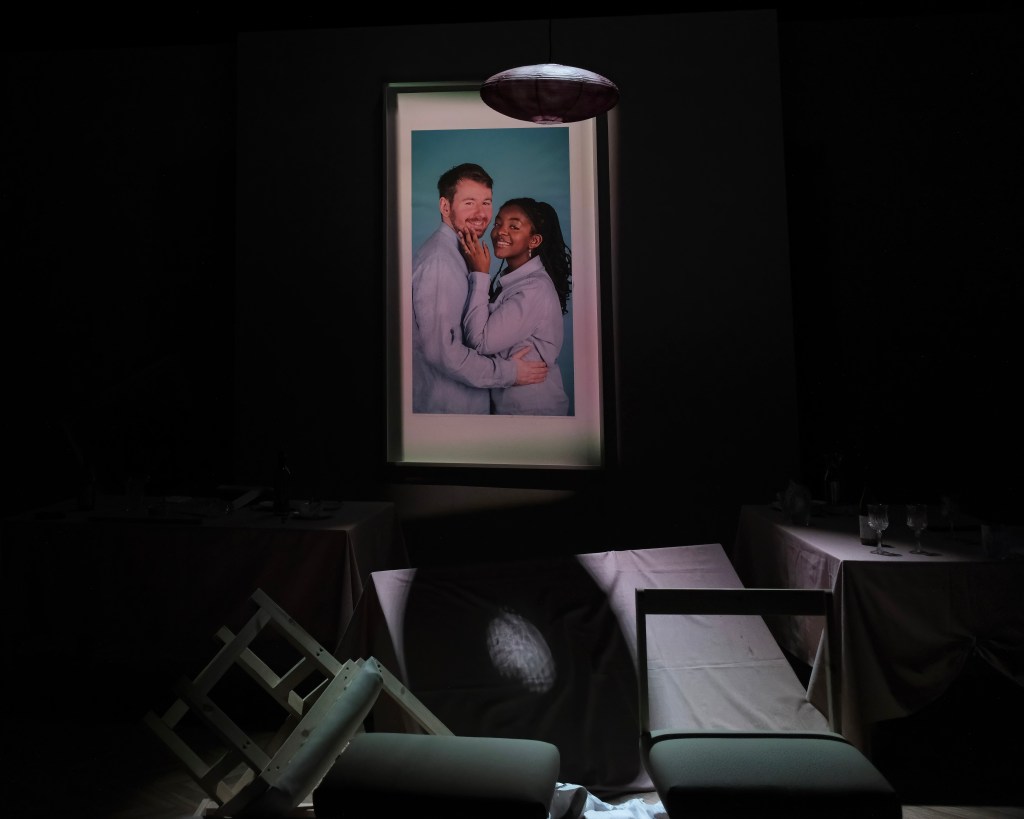
From Left to Right: Darren McColl, Daniel Fitzpatrick, Aimée Uwera and Olu nduka Ebenezer.
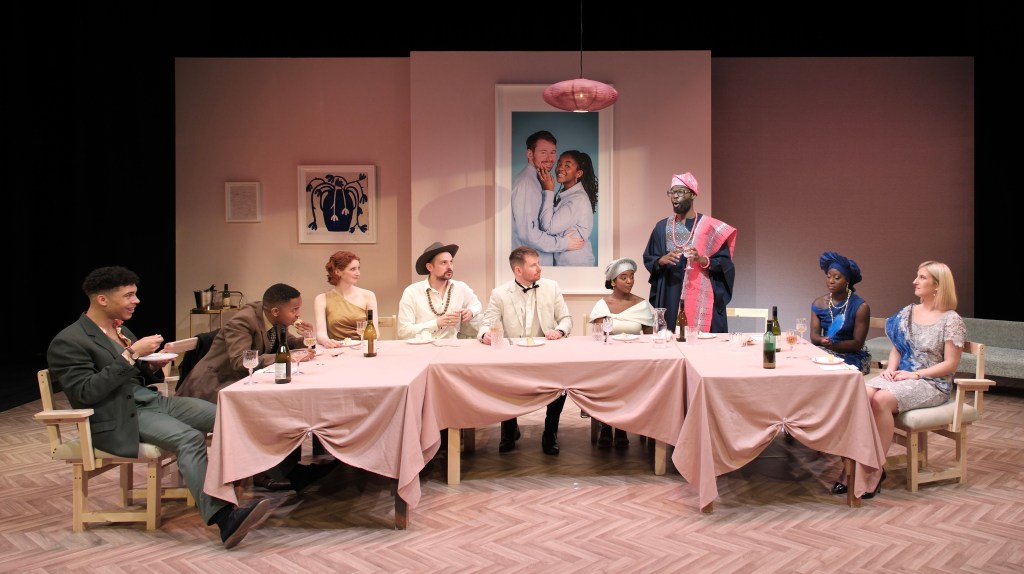
From Left to Right: Orion Martin, Tawana Tongoona, Hopey Parish, Darren McColl, Daniel Fitzpatrick, Aimée Uwera, Olu nduka Ebenezer, Dionne Hunter and Madeleine Davison-Emmons.
Bertolt Brecht created A Respectable Wedding in 1919 to satirically highlight a bourgeois event. The play presents a wedding celebration, which gradually becomes polluted through gossip, entertainment, and conflict, ending in the destruction of friendship, relationships and furniture. In the context of this adaptation, Yhip comments about using Rory Bremner’s translation that it ‘makes some concessions to contemporary understanding and minimal changes to the original text’. This adaptation extends the celebration towards Black History Month by presenting an Anglo/Nigerian Wedding and using the musical direction of composer Juwon Ogungbe to create an original musical score for this production.
‘Only the human spirit and capacity for joy and love can transcend the calamities that mankind imposed on the world’.

The audience enters the theatre to find a large table, a portrait of the bride and groom, and a photo of dying flowers, hinting at the night’s events. The open set made us feel we were witnessing something tailored for us. Two doorways without doors symbolised the lack of control over who enters and exits our lives, emphasised by the cast’s abrupt appearances and disappearances. The play began with joyous music and we found our cast dancing and singing in celebration—their energy connected with the audience, creating a communal experience. The music blended vibrant culture and happiness, resonating with the actors’ performances. Costumes showcased the merging of the Anglo and Nigerian cultures with the Bride (Aimée Uwera) and the Groom’s Mother (Madeleine Davidson-Emmons) wearing outfits that incorporated both of the family’s traditions, through colour and style.
Nine remarkably talented and captivating performers stood before me, showcasing the profound joy that comes from shedding the constraints of social decorum. They invited us to revel in the rawness of human experience, as they boldly expressed their innermost thoughts and feelings, unencumbered by the trappings of pomp and circumstance. Their fearless exploration of desire and authenticity left the audience both enchanted and invigorated.

From Left to Right: Tawana Tongoona, Hopey Parish, Darren McColl, Daniel Fitzpatrick, Aimée Uwera, Olunduka Ebenezer, Madeleine Davidson-Emmons.
Olu Nduka Ebenezer delivered a memorable portrayal of the Father of the Bride, bringing warmth and humour through his storytelling and nostalgia. His reminiscing highlighted a proud father eager to embrace the Groom, with heartfelt moments that captured a father’s love and the bittersweet nature of letting go. In contrast, Madeleine Davidson-Emmons as the Mother of the Groom served as the wedding’s backbone, embodying perfectionism and commitment to a flawless day. Her portrayal illustrated the pressures of wedding planning, balancing chaos with humour and depth. Together, they created a rich tapestry of familial relationships, showcasing the contrasting yet complementary roles of parents in a wedding’s emotional landscape, resonating with the audience and evoking both laughter and empathy.
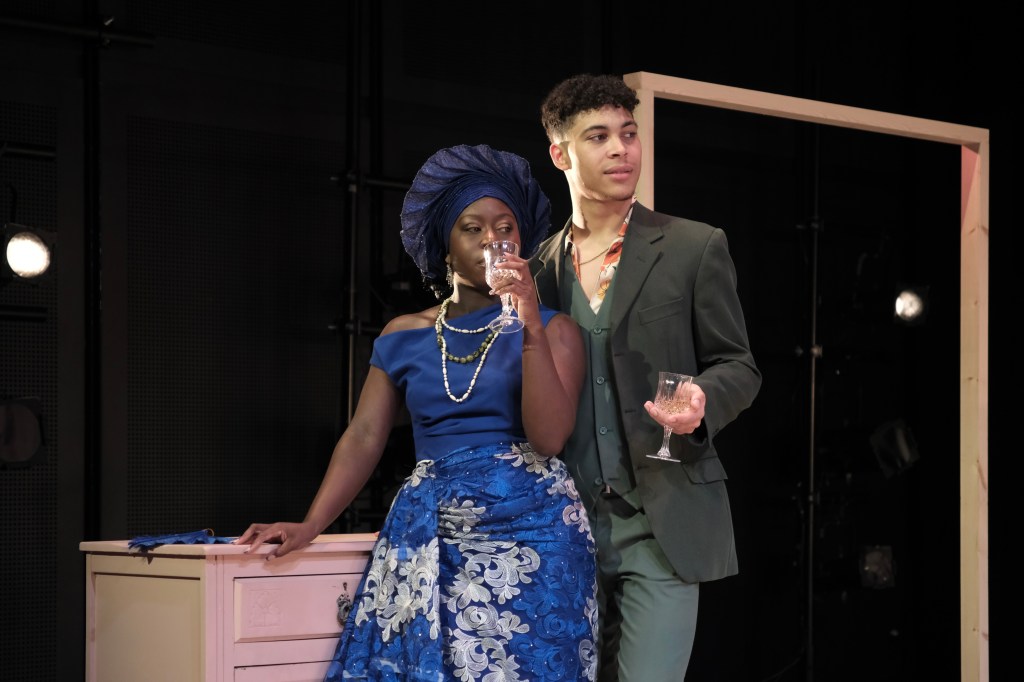
From Left to Right: Dionne Hunter, Orion Martin.
Orion Martin as the Young Man and Dionne Hunter as Sister delivered nuanced performances. Martin captivated the audience with his charisma, concealing desires beneath a charming exterior, while Hunter authentically portrayed Sister, embodying a kind-hearted yet subtly envious character. Her depiction of sibling rivalry created palpable tension on stage. Together, they forged a compelling connection, navigating buried feelings beneath a veneer of kindness.
Hopey Parish and Tawana Tongoona as the Wife and Husband ensnared the audience with their dynamic relationship, highlighting the discrepancies between their desires and societal roles. Tongoona poignantly portrayed the Husband’s insecurities, while Hopey’s Wife yearned for independence, with her descent into drunkenness illustrating the complexities of marriage. Their performances offered a mature critique of marital dynamics, inviting the audience to reflect on love, expectation, and hidden struggles.

From Left to Right: Dionne Hunter, Aimée Uwera, Tawana Tongoona, Hopey Parish, Darren McColl and Orion Martin.
Darren McColl’s portrayal of the Friend was captivating from the start. Initially a fun-loving sidekick, he masterfully transformed the character, guiding the audience through themes of love, jealousy, and human flaws. His interpretation revealed a multifaceted figure who balanced light-hearted banter with deeper introspection. McColl’s skilful navigation of emotional shifts kept the audience engaged, prompting reflection on the complexities of relationships. His performance drew out the vulnerabilities of other characters, illuminating the darker aspects of companionship. Transcending mere comic relief, McColl’s portrayal served as a poignant reminder of the dynamics in our connections, leaving a lasting impression and proposing contemplation on the balance between loyalty and desire in friendship.
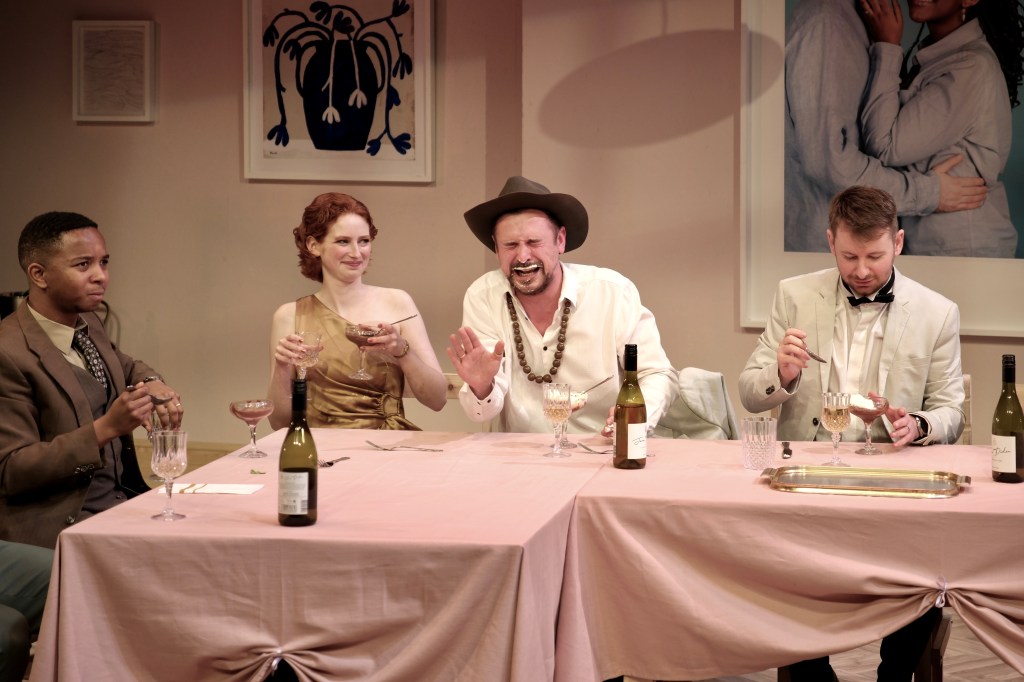
From Left to Right: Tawana Tongoona, Hopey Parish, Darren McColl and Daniel Fitzpatrick.
Aimée Uwera and Daniel Fitzpatrick, in their roles as the Bride and Groom, effectively highlight the difficulties of maintaining a relationship. Amid the chaos of their wedding celebrations—marked by wine and wild revelry—they skilfully redirected focus to the love that brought them together. Their emotional journey resonated with the audience as they traversed insecurities and vulnerabilities. Fitzpatrick portrayed the Groom with emotional maturity, conveying jealousy and tension that complicate their relationship. Uwera brought depth to the Bride, illustrating the pressure of societal expectations while capturing the joy of love. Together, they created a powerful depiction of a couple facing the realities of commitment. Their performances reminded the audience that, despite the chaos, the foundation of their relationship is a genuine connection. Ultimately, they invited reflection on the effort required to nurture love amid life’s unpredictability.
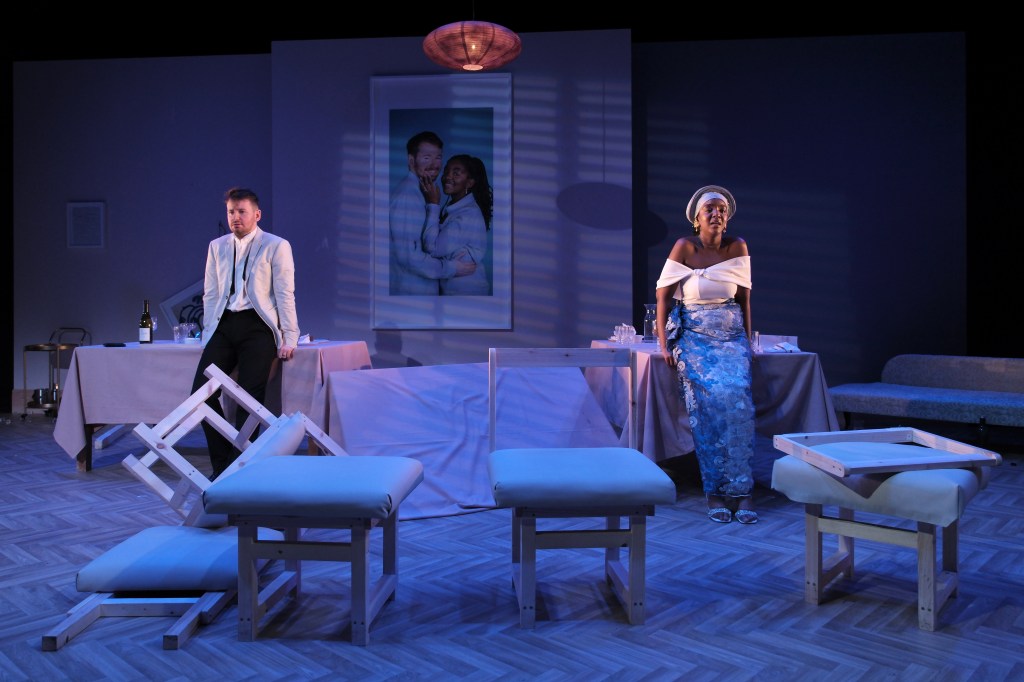
From Left to Right: Daniel Fitzpatrick, Aimée Uwera.
After the furniture has collapsed and darkness has descended, I want to express my heartfelt gratitude to this incredible cast. You reminded us of the importance of collaboration, both on stage and in life. Your skill and passion captivated the audience and drew us into the emotional depths of your characters. Together, you illuminated the complexities of relationships and encouraged reflection on our own connections. Congratulations to the remarkable third-year cohort of the BA (Hons) in Acting at Manchester School of Theatre. Your dedication resulted in a truly special performance. Thank you to director Deborah Yhip for her vision and guidance. This performance will resonate with us long after the final curtain, and we are grateful for the experience you’ve given us.
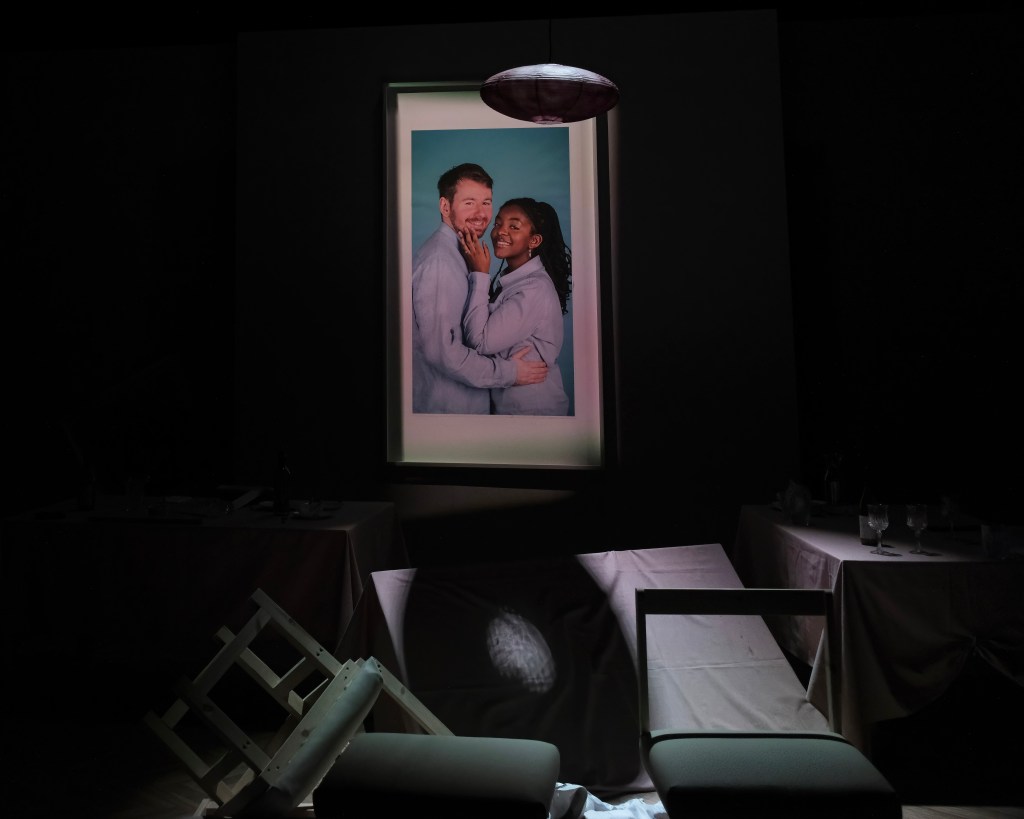
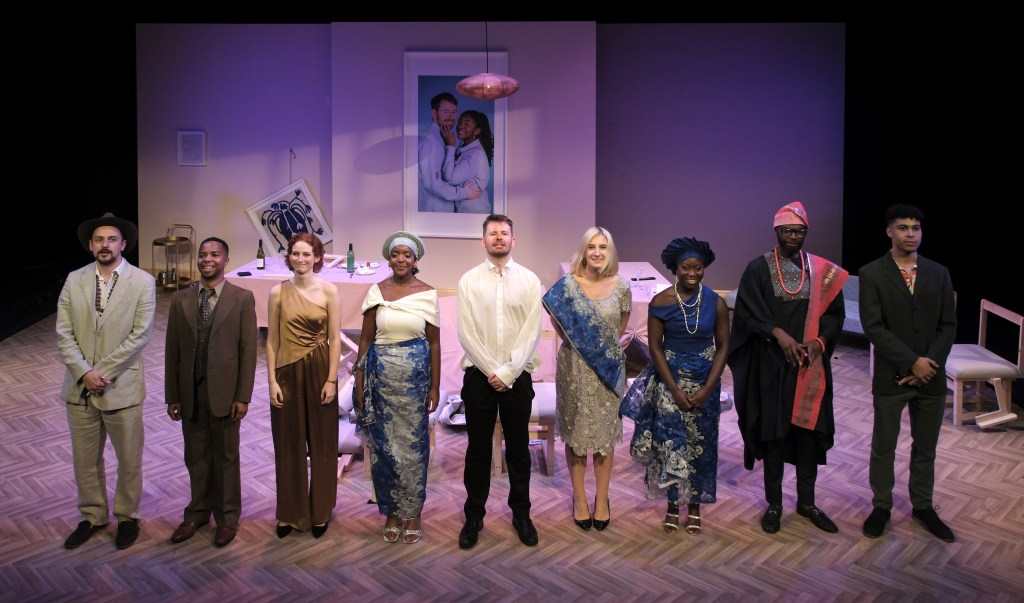
From Left to Right: Darren McColl, Tawana Tongoona, Hopey Parish, Aimée Uwera, Daniel Fitzpatrick, Madeleine Davison-Emmons, Dionne Hunter, Olu nduka Ebenezer and Orion Martin.

Ben Knowles is a teacher and scholar based in Manchester, whose research focuses on autodidacticism, laboratory theatre and performance pedagogy. With a background in Acting and Contemporary Performance, he combines multidisciplinary approaches to create student-centred sessions on performer training. With a strong interest in movement pedagogy, he creates work fuelled by his research.
 E-CIBS