

(Deutsche Version weiter unten.)
“The wage laborers’ work too no longer appears to them as it truly is.”
A conversation about Epic Theatre to mark the release of Tropen des Kollektiven. Horizonte der Emanzipation im epischen Theater (Tropes of Collectivity: Horizons of Emancipation in Epic Theater) Theater der Zeit, November 2024.
Tropen des Kollektiven investigates three iconic performances of epic theater at the end of the Weimar Republic: Hoppla, We’re Alive! at the Piscator-Bühne; The Mousetrap, a play by a group of independent actors—Truppe 31—who came together during the economic crisis of 1931 to found their own theater; and The Rise and Fall of the City of Mahagonny, the result of a collaboration among numerous artists who were rather loosely connected. The book examines the visions or utopias of a non-capitalist society that these leftist theater projects developed by elevating their own work as a model and, with reference to Marx, fundamentally questions the nature of artistic labor.
ER: In your book Reading and Spectatorship in the 18th Century, you explored the moment when the fourth wall was introduced in theater. Today, twenty years later, you tackle avant-garde theater in the early twentieth century, that is, the moment when the fourth wall is once again torn down. Both cases have something to do with what one might call progress, perhaps even revolution, and in both cases, when I think of the great era of naturalistic theater, this theatre revolution also brings social issues into focus. I ask as an author and layperson, not as a theatre scholar or historian, which I am not: The reversal of the reversal—why? Where did the impulse come from in the 1920s? What was lacking? What boundaries had to be crossed? And: Is there not, purely in formal terms, a certain resemblance between the theater of the 18th century, where one arranged oneself in a semicircle and revealed oneself as an actor playing roles, and what the Brecht collective later did with their principle ‘we-show-that-we-are-acting’?
MR: I would describe two things differently. Firstly, the formation of the Fourth Wall and its abolition are not, in my view, part of a progressive history. I describe this without judgment, and it was also not without alternatives and second, the ‘abolition’ of the Fourth Wall is not a return to the presentational theater of the 17th century. The development of this style of performance is connected to banal material changes, such as new possibilities for stage lighting, or disciplinary measures like the presence of police in the auditorium, who were tasked with keeping the audience quiet, and so on. At the same time, it is tied to a new awareness of the importance of the present and less interest in ‘repeating’ old grand narratives, and so forth. The tearing down of the fourth wall also requires technical prerequisites, new possibilities for projection and sound, mobile stages, etc., and has something to do with the impossibility of processing complex social processes within the framework of ‘closed stories’. The now unhidden display allows everything to become a subject, breaks continuity, and simultaneously connects to notions of ‘theater as community,’ which are often laden with references to antiquity, while in the theater of the Fourth Wall, the spectators seemingly consume a ‘product’ as isolated individuals. The abolition of the Fourth Wall enables a presentational theater, but this is something entirely different from the presentational theater of the 17th century (the similarities are really only ‘formal,’ or rather, superficial). The new presentational theater has historically gone through the Fourth Wall; it no longer establishes direct contact with the audience under any circumstances. It is, like any production, the result of cooperative rehearsal work, which cannot be shown at the same time and thus requires distance. The theater of the 17th century knew no rehearsal as we know it; the stories were known, the roles predetermined, the speaking styles regulated, and the actors learned their parts without the presence of the others, and so on.
ER: I know, being schooled in Foucault, you’re not exactly inclined toward the concept of progress. Nevertheless, I see a development in theater starting from the 18th century that, even in naturalistic theater, flows into its choice of material and social interest. Let’s call it change. Certainly, this is connected to the development of society. Without early capitalism, there would be no The Weavers by Hauptmann. Even the engaged theater of the 1920s, which you describe in your new book, is fully in tune with the contemporary political, philosophical, and economic theory of its time. It has to do with the liberation of the working class from alienated conditions of production. In this, the approaches of the three theater groups you focus on differ. If I understand correctly, Truppe 31 and the Piscator group are, in a sense, attempting to prefigure liberation from capitalist conditions in their theatrical work. One could think that this approach is plausible: art as an act of self-realization. Why doesn’t it work? And what doesn’t work?
MR: Yes, that’s plausible, but, perhaps oddly, Piscator and Truppe 31 don’t reflect on the peculiarities of artistic work at all —what we call rehearsal. Truppe 31 is proud of having rehearsed for nine months, with more than 85 rehearsals, but what they did there remains unknown. Instead, Piscator and Truppe 31 present their work as superior productive labor, essentially restaging it in the model of non-artistic work and simply skipping over the difference between artistic and non-artistic labor. This is a characteristic of many leftist avant-garde artists, not just in theater, and also a challenge for leftist aesthetic theory—consider Walter Benjamin’s lecture, “The Author as Producer,”1 although, in the end, he does shy away from a complete equation of non-artistic and artistic labor. That’s why it doesn’t work.
ER: What do you mean by “restaging”? That factory work is directly staged on the theater stage?
MR: “Restaging” doesn’t quite fit when it comes to Piscator, because it is likely less of a conscious process. But if one looks at Piscator’s and Walter Gropius’s plan for a ‘total theater’ (Piscator’s term) and the enormous technical effort that went into the staging, then one could get the impression that the collaboration expected here between actors and audience would be like the technical collaboration of a factory. Actors are reduced to functional roles in the complex technical processes (Piscator also calls them ‘functions’ such as light, sound, projection2). The audience is conditioned for reactions of shock. You could call it a “deskilling” of the audience in analogy to industrial labor. When Piscator talks about the preparation of the performances, he is primarily interested in the technical effort, the hard manual labor. Truppe 31, on the other hand, actually restages their rehearsal work, aiming to showcase it as collective labor which is comparable to that in factories.
ER: It’s to be expected that rehearsal and performance are imbued with the same spirit. But it goes even further. You describe a performance of Truppe 31 that, in an almost touchingly naive way, anticipates a fundamental dilemma of ‘the real existing socialism’. The group, as you describe, depicts on stage the liberation of the working class by taking over the assembly lines. Now the means of production belong to them. With that, the problem seems to be solved. But everything else has, in reality, remained the same. The dehumanizing, destructive nature of the work is exactly the same. I find it highly interesting that, in this context, you point out a conflict within Marxist theory. In my words: on the one hand, Marx of course understands that capitalist production destroys, alienates, makes humans one dimensional; on the other hand, he relies on modern industrial production as the site where the revolutionary subject forms and revolution happens. Industrial production cannot be done away with or overcome within this framework, and this is exactly what the performance by Truppe 31 reflects.
MR: Yes, the “helpless” experiment does not transcend industrial society. Showing that was what mattered to me. Liberation is always thought of only as liberation of the productive forces, not as liberation from them. This takes different artistic forms in Piscator and in Truppe 31. My starting point was a surprise: these theater groups emphasize their cooperative work, the collective creation of performances, but they never talk about what they actually do—the rehearsals. Had they done so, I claim, it would no longer have been possible to understand their artistic activity as a better form of industrial labor, and they would have arrived at different utopias. But that does not mean that artistic work is free labor; it is a suitable starting point for critique precisely because it too is capitalist (albeit of a different kind). And ‘industrial society’ is a term that I also find useful, one that allows us to recognize something in common despite the systemic differences between East and West. For me, industrial production in the Soviet Union is ultimately a variant of capitalist production.
ER: If I understand correctly, you consider the approach of those you call the ‘Versuche Gruppe’ – Brecht was part of it – to be rather successful, precisely because the group does not try to deny the capitalist conditions of the production of art or pretend to offer a liberation from them on stage, but instead shows the capitalist conditions by unmasking them. Could one say that this impulse represents the birth of the so-called epic theater?
MR: Yes, you’ve said that well. “Unmasking” — that’s it. However, I understand epic theatre more broadly: Piscator and Truppe 31 definitely belong to it. They are attempts to shift the attention from the fictional to the performance itself by making the here and now of the presentation the decisive factor. The fact that something is being represented is no longer concealed and becomes the cornerstone of an aesthetic-political project. Yet what the Versuche Gruppe does—a direct intervention for the purpose of unmasking—was very short-lived, not least because of the theater crisis, which was part of the great economic crisis, and the rise of the National Socialists. But this phase provided important impulses for what would later be considered ‘classical works’: The Caucasian Chalk Circle, Mother Courage, etc.
ER: You say that if Truppe 31 hadn’t tried to understand their artistic activity as a better form of industrial work, they might have arrived at other utopias, i.e., possibly at the question of overcoming industrial society. But what about the Versuche Gruppe? By deciding not to overcome the capitalist conditions under which it produces (and lives)—not even in the theater—but merely to make them recognizable, it essentially remains bound to these conditions, in this respect not unlike Marx. Marx, too, who, to put it bluntly, seems downright enamored with his subject, ultimately remains fixated on capitalism. He offers very little in terms of concrete utopia, and certainly does not, as we discussed above, put industrial society into question. And thus, the work of the Versuche Gruppe also does not point beyond this horizon. It “shows,” it merely explains capitalism to us. Do you see it differently?
MR: No, but I think that what the Versuche Gruppe achieves is everything that can be achieved. The moment of being enamored with the spectacle of consumption does exist; without it, this critique might not even be possible, but the success lies in affording the experience that capitalism is surmountable—specifically in the theater, but through that, beyond theater as well. Kant made a distinction between a limit and a boundary: a limit merely blocks, cuts off, but when one is at the boundary, one is also on it and already beyond it. This happens when the actors and the audience are able to observe their own behavior. What we do with this experience is no longer a matter for the theater.
ER: Adorno refers to Brecht’s “didactic poetry” in “On Commitment” and criticizes: “The people on stage visibly shrink to … agents of social processes and functions.”3 Perhaps this is an exaggeration, nevertheless: Brecht explains the world; he knows it well, which seems challenging today in light of the failure of the socialist utopia, particularly because this utopia does not include the possibility of liberation from production itself. The question for me is to what extent Brecht’s method precludes anything that the producer of the work does not already know, does not already have in mind. And whether art is not, actually, something that aims for this kind of added value, for what is not knowable in advance. Or does that stray too far from your text?
MR: You’re not off track. With this criticism, Adorno is explicit that he is not referring to the phase of epic theater, which I primarily examine, the one to which The Rise and Fall of the City of Mahagonny belongs. He wrote an enthusiastic review of the Frankfurt performance of Mahagonny and noted that, apart from the Schoenberg operas, [he] ‘knew of no work that better fulfills the concept of the avant-garde4‘ and in another review, he writes that ‘with Mahagonny‘, the anarchy of commodity ‘is abbreviated to the point of crass horror that no economic analysis could achieve’5. Through the distancing made possible by this, liberation from large-scale production indeed becomes conceivable here. This phase of epic theater made by the Versuche Gruppe does not, strictly speaking, produce works at all; rather, it intervenes in works and their conditions of performance. The ‘didacticism’ of the later, ‘genuine’ plays of this kind of epic theater also stems from the situation of exile and is associated with a far more traditional practice of authorship, which once again positions Brecht as the principal authority. This is definitely one of the themes of the book.
ER: I want to phrase the question differently. There is that famous letter from Engels to Margaret Harkness, in which he makes clear, using the example of Balzac, that the text of an author can be cleverer than the author themself.6 That’s the added value I’m interested in. Can that happen with Brecht? Or is such a thing only possible when authors put themselves at risk? By the time we get to the Lehrstücke, Brecht’s didacticism becomes unbearable for me. This may have something to do with my family history, which was directly affected by Stalinism. But a play like The Measures Taken is, in my view, a preemptive apology for the Red Terror. Essentially, it’s about justifying the sacrifice of human lives. The one must be sacrificed for the sake of the many. The play aims to set that tone for the audience; it is meant to be rehearsed by amateurs. And the play is constructed— “constructed” is really the right word here—in such a way that no other choice is at all possible. There can be no surprises. There’s no room here for anything beyond the author’s intention.
MR: In my book, I try to think about such observations — that the author’s intention seems to assert itself so directly, leaving so little room for the created work to be ‘cleverer’— from a production-aesthetic perspective and I look to identify the problems to which such a didactic aesthetics responds. In the “Mahagonny phase” of the Versuche Gruppe, the regime of art’s valorization was targeted; this required subverting the very notion of creative authorship. They achieved this by keeping the artistic elements—music, word, performance, image, etc.—separate, which made their “carriers” visible as independent “producers,” and also through the quotation-like character of the whole, which no longer allowed for the notion of a singular origin. With the rise of the National Socialists and exile, the conditions of production changed. With the Lehrstücke, which were also collective projects, the primary goal was political education. Moreover, The Measures Taken was an experiment to determine whether the actions proposed by the play could even be made plausible; thus, the political was purposely linked with the aesthetic to put it to the test. This can be seen in the many reworkings, which basically show that the authors never fully control the meaning. Incidentally, Hannah Arendt then praised The Measures Taken for exposing the logic of terror and trials.7 The plays from the exile period, where there was no longer a stable audience, were written to be read, no longer intended as direct interventions into a theatrical praxis. Although the work was still fundamentally collaborative, the aim, simply put, was to secure meaning, because the reception had become almost impossible to control. The cooperative praxis restored the relation to the individual author, not least to safeguard the clarity of the meaning. One can criticize this from Adorno’s perspective and say that it comes at the expense of art and politics and becomes a lazy compromise. My concern, however, is not with such value judgments, but with tracing how the form of cooperation changes and how this is expressed in the aesthetic form and in the potential for utopia.
ER: When Hannah Arendt praises The Measures Taken for exposing the logic of terror and the trials, that is certainly not what Brecht intended. Should one say here: the play is cleverer than the author, in the sense of Engels?
MR: Yes. In essence, I would say: every text is cleverer than its author, even if authors attempt to make the meaning explicit and secure it for the future. That’s inevitable, precisely because it is never just the text of one author, rather society collaborates on it. And because the possibilities of meaning obviously are always influenced by the circumstances of reception, which authors can never control. With The Measures Taken, such collaboration is elevated to a programmatic level. Hanns Eisler, Brecht, and Elisabeth Hauptmann, and certainly others, worked on text and music. The Measures Taken is a singing piece (!), and it is designed for a reworking that will be necessitated by the praxis of rehearsal. Not an arbitrary reworking, as Paul Hindemith suggested8, rather the textual performance template has first to be made plausible as far as possible. When the performers push up against their limit, the template is returned to the writers, and changes can be ‘requested,’ as it is mentioned somewhere in the notes on the Lehrstücke. This puts the possibility of agreement with the agitators’ approach to the test, even if that was not perhaps part of the original plan. This is what I mean when I say: the aesthetic becomes a test for politics.
ER: I won’t insist any further here. It’s nice that you defend Brecht. But are there limits? You speak of the attempt to undermine the creative authorship in order to attack the capitalist principle of exploitation. On the other hand—and this is a contradiction—I read in your work that within the Versuche Gruppe, this illusion didn’t exist at all: the idea of freeing art from the capitalist principle of exploitation. It is entirely consistent with this attitude—”The circumstances are not like that!”—that Brecht ultimately appropriates the collective labor—or contributions, depending on how one views his role—both intellectually and materially. This brings me, much-discussed topic though it is, to Brecht’s relationship with women, as it was primarily women whom he exploited. I wonder to what extent this relationship is reflected aesthetically. I’m really not known for being “woke,” but songs like Surabaya-Johnny or Ballad of the Pimp rub me the wrong way with their brothel-and-beating romanticism. I don’t see how anything is being “unmasked” here. I don’t find it amusing when the whore raves about how her fellow once “smacked me right in the gums.”9 Your book is consistently gender-inclusive from start to finish; maybe that’s why I expect more emphasis on this topic? Or do you think the false romanticism reveals itself on its own?
MR: I think it does nowadays. But even if that may be unsatisfying for you, I’m not concerned with defending or condemning Brecht. What matters to me is establishing a connection between, to put it simply, the artistic way of working and the form of the work (and thus also of what can be represented). And in this context, I address both the gender relations and the relations of appropriation that shape the organization of labor. I discuss, for example, the Mandalay Song, which describes a colonial brothel and employs a similar register to Surabaya Johnny. This is precisely why there is a chapter on the limits of critique. However, I focus on the colonial references because they are absolutely foundational for Mahagonny, and the Mandalay Song is part of this. In my concluding chapter, the female characters in the exile plays then become central. When in Mother Courage, The Good Person of Szechwan, or The Caucasian Chalk Circle, capitalism is criticized on the grounds that women lose their capacity for compassion or concern for their children, such criticism only functions under the assumption of certain natural female characteristics. At such points, the critical exposition comes to an end. That capitalism relies both on colonialism and on certain gender differentiations is no longer within the scope of their critique. Such contradictions in what the Versuche Gruppe sets out to achieve are, as I suggest, partly connected to a productivist understanding of artistic material, which can no longer unlock the stories of oppression embedded within the material itself. Regarding your question about Brecht’s appropriation of others’ work: I start from the assumption that artistic work is always cooperative, but it has to come forth as a individual creative act, which means it relies on appropriation; everyone involved contributes to this, so the appearance of individual creation is itself produced cooperatively. The wage laborers’ work too no longer appears to them as it truly is. In the case of the Versuche Gruppe, as mentioned, the form of authorship changes with exile. While Mahagonny still focused on critical exposure, in the exile plays the author becomes something like a production manager—with control and oversight, whose word is always final, even if it has to be repeated constantly. Of course, one could make it personal and accuse Brecht of falling short of his own ideals, but as you say, that’s for other books; that’s not the question my work addresses.
ER: No, I’m not trying to condemn Brecht. I’m more interested in something like the connection between aesthetics and capitalist appropriation. But let’s turn to the colonial references in Mahagonny. While I find the question of women perhaps somewhat underdeveloped, I have trouble following the chapter on racialisation—the German might be somewhat of an inelegant term here [Rassifizierung]. Undoubtedly, the European world in Brecht’s time was racist and marked by colonial condescension; that much is beyond question. However, I would not directly accuse Brecht and the Versuche Gruppe of racism, despite their ‘imprisonment’ in that period of time. I would like to keep my question focused specifically on the topic of jazz; I would appreciated if your response also remains on this subject, so that we do not need to get into every aspect of your argument. What you’re saying is roughly the following, if I understand correctly (I admit it wasn’t easy for me): It concerns the commodity character of entertainment, piss-ups, sex, and fights. The sophisticated consumerism of Mahagonny, according to your argument, establishes a paradoxical connection to primitive excess through the jazz which is perceived as Black. The “Blackness” is, so to speak, made culinary and, although disembodied, becomes an object of consumption—a commodity. If one argues in this manner, every cultural flow, every crossover, every exchange—in essence, the driving force of all cultural movement—would be reduced to a racist gesture. When Kurt Weill incorporates the untamed, wild element—which jazz certainly has—into his own music, for example as a commentary on the genuinely untamed, wild, and in reality not particularly ‘refined’ consumerism depicted in Mahagonny, I don’t see anything racist in that. To denounce this music as “primitive” is racist. Did Kurt Weill do that? Did he compose “primitive” music in order to establish any kind of association between capitalist consumption and Black culture? Was that something he inadvertently did? Or is that just hindsight? Didn’t Kurt Weill, in reality, do exactly what you describe in your book as an essential condition of all art—that is, drawing from collective sources—which, fortunately, are not limited to domestic poetry and folk songs?
MR: Weill did that too, but Mahagonny is a different matter. I would absolutely distinguish between different ways of appropriating jazz, and my intention is not to criticize cultural exchanges or inspirations. You say, “‘Blackness’ is, so to speak, turned into something culinary” in Mahagonny, but it’s more like reusing something which is already “culinary” or laden with stereotypes. That’s the issue. When the notes for The Measures Taken state that the greed of the merchant should “be expressed through music that is merely the imitation of music, namely through jazz,”10 and Brecht simultaneously admits that this imitative character is, of course, only a result of its cultural-commercial conditioning in Weimar, it seems to me that they are not addressing this cultural conditioning as a subject but rather reproducing it by instrumentalizing it. This happens in Mahagonny not only through the music but also through texts like the Mandalay Song or through Caspar Neher’s projections, in which Paul Ackermann transforms into a Black entertainer when he proclaims the new law of unrestrained indulgence: “You may.” Racialization consistently becomes an element of commodity critique.
ER: Let’s leave it at that. You have written a clever and fascinating book that, on the one hand, honors epic theater, while on the other hand reveals its limitations, even—your words—its failure in attempting to prefigure a non-capitalist society within the theater. Much of it was new to me. I don’t claim to have understood everything, but I learned a lot. I thank you for this book and for the undoubtedly immense effort that went into it.
(This conversation between Eugen Ruge and Matthias Rothe was conducted in writing, in April 2025.)

Eugen Ruge writes novels and plays. His books have received numerous awards, including the Alfred Döblin Prize, the Aspekte Literature Prize, and the German Book Prize (selected works include: Pompeji oder Die fünf Reden des Jowna (Novel. dtv, 2023); Metropol (Novel. Rowohlt, 2019); Follower (Novel. Rowohlt, 2016); Theaterstücke: 1986-2008 (Collected Volume. Rowohlt 2015); In Zeiten des abnehmenden Lichts: Roman einer Familie (Novel. Rowohlt, 2011).
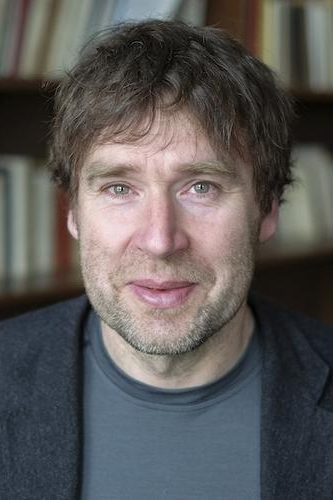
Matthias Rothe is a Professor of German Studies and Philosophy at the University of Minnesota (selected publications include: Tropen des Kollektiven. Horizonte der Emanzipation im epischen Theater (Theater der Zeit, 2024); „Michel Foucault und/oder die Aufklärung?“ Merkur 12/24, “Economic Psychos. Volker Brauns Das ungezwungene Leben Kasts nach Bret Easton Ellis”, Text und Kritik 55 2023).
Tropen des Kollektiven: Eugen Ruge interviewt Matthias Rothe
„Den Lohnarbeitern erscheint ihre Arbeit auch nicht mehr als das, was sie ist.”
Gespräch zum epischen Theater anlässlich des Buches Tropen des Kollektiven. Horizonte der Emanzipation im epischen Theater. Matthias Rothe. Theater der Zeit, November 2024.
Tropen des Kollektiven analysiert drei ikonische Aufführungen des epischen Theaters am Ende der Weimarer Republik. Hoppla, Wir leben! an der Piscator-Bühne, Die Mausefalle, das Stück einer Gruppe freier Schauspieler*innen – der Truppe 31 – die sich in der ökonomischen Krise 1931 zusammentaten und ihr eigenes Theater gründeten und Aufstieg und Fall der Stadt Mahagonny, Ergebnis einer Zusammenarbeit vieler Künstler*innen, die nicht institutionalisiert waren. Das Buch fragt nach den Vorstellungen oder Utopien von einer nicht-kapitalistischen Gesellschaft, die diese linken Theaterprojekte entwickelten, indem sie ihre eigene Arbeit zum Modell erhoben, und es fragt, mit Bezug auf Marx, ganz grundsätzlich danach, was eigentlich künstlerische Arbeit ist.
ER: In deinem Buch Lesen und Zuschauen im 18. Jahrhundert hast du dich mit dem Moment beschäftigt, als man im Theater die Vierte Wand einführte. Heute, zwanzig Jahre später, befasst du dich mit dem Avantgardetheater im frühen zwanzigsten Jahrhundert, also dem Moment, da die vierte Wand wieder eingerissen wird. In beiden Fällen handelt es sich um etwas, das man Fortschritt nennen könnte, vielleicht Revolution, und in beiden Fällen kommen – wenn ich etwa an die große Zeit des naturalistischen Theaters denke – mit der Theaterrevolution auch soziale Themen in den Fokus. Ich frage als Autor und Laie, nicht als Theaterwissenschaftler oder Historiker, der ich nicht bin: Die Umkehrung der Umkehrung – warum? Woher der Impuls in den zwanziger Jahren des letzten Jahrhunderts? Was genügte nicht? Welche Grenzen waren zu überwinden? Und: Gibt es nicht rein formal eine gewisse Verwandtschaft zwischen dem Theater des 18. Jahrhunderts, wo man sich im Halbkreis aufstellte und sich als Spieler von Rollen zu erkennen gab, und dem, was die Brecht-Gruppe später mit ihrem Grundsatz ‘Wir-zeigen-dass-wir-spielen’ gemacht hat?
MR: Ich würde zwei Dinge anders beschreiben: Erstens, die Herausbildung der Vierten Wand und ihre Abschaffung sind für mich nicht Teil einer Fortschrittsgeschichte. Ich beschreibe das ohne Wertung und es war auch nicht alternativlos, und zweitens, die ‚Abschaffung‘ der Vierten Wand ist keine Rückkehr zum präsentierenden Theater des 17. Jahrhunderts. Die Herausbildung dieser Spielweise hat etwas mit banalen materiellen Veränderungen zu tun, neue Möglichkeiten der Bühnen-Ausleuchtung etwa oder mit disziplinarischen Maßnahmen, der Anwesenheit von Polizei im Saal, die das Publikum ruhig zu stellen hatte usw. und zugleich mit einem neuen Bewusstsein für die Bedeutung von Gegenwart, weniger Interesse am ‘Wieder-holen’ alter großer Geschichten usw. Das Einreißen der Vierten Wand hat ebenso technische Voraussetzungen, neue Möglichkeiten der Projektions- und Beschallung, mobile Bühnen usw., und hat etwas mit der Unmöglichkeit zu tun, komplexe gesellschaftliche Vorgänge im Rahmen von ‚geschlossenen Geschichten‘ abzuarbeiten. Das nicht mehr verborgene Zeigen erlaubt ja alles zum Thema zu machen und bricht Kontinuität auf und schließt gleichzeitig an Vorstellungen von ‘Theater als Gemeinschaft’ an, die oft mit antiken Bezügen befrachtet sind, während im Theater der Vierten Wand vermeintlich die Zuschauer als vereinzelte nur ein ‘Produkt’ konsumieren. Die Abschaffung der Vierten Wand ermöglicht ein präsentierendes Theater, aber das ist etwas ganz anderes als das präsentierende Theater des 17. Jahrhunderts (die Ähnlichkeiten sind wirklich nur ‚formal.‘ oder besser, oberflächlich). Das neue präsentierende Theater ist durch die Vierte Wand hindurchgegangen; es stellt unter keinen Umständen einen direkten Kontakt zum Publikum mehr her. Es ist wie jede Produktion das Ergebnis einer kooperativen Proben-Arbeit, die nicht gleichzeitig mitgezeigt werden kann und erheischt so Distanz. Das Theater des 17. Jahrhunderts kannte keine Probe in unserem Sinne, die Geschichten waren bekannt, die Positionen vorbestimmt, die Sprechweisen geregelt, die Spielenden lernten ihre Rollen ohne die Anwesenheit der anderen usw.
ER: Ich weiß, du bist als Foucault-Geschulter dem Fortschrittsbegriff nicht eben zugeneigt. Dennoch sehe ich eine Entwicklung des Theaters vom 18. Jahrhundert aus, die, schon im naturalistischen Theater, auch in der Stoffwahl und in sozialem Interesse mündet. Nennen wir es Veränderung. Diese hängt sicherlich mit der Entwicklung der Gesellschaft zusammen. Ohne Frühkapitalismus gäbe es keine Weber von Hauptmann. Auch das engagierte Theater der zwanziger Jahre des 20. Jahrhunderts, das du im neuen Buch beschreibst, ist ganz auf der Höhe der zeitgemäßen politisch-philosophisch-ökonomischen Theorie. Es geht um die Befreiung der Arbeiterklasse aus den entfremdeten Produktionsbedingungen. Hierbei sind die Ansätze der drei Theatergruppen, die du fokussierst, verschieden. Wenn ich richtig verstehe, versuchen die Truppe 31 und die Gruppe um Piscator gewissermaßen die Befreiung von kapitalistischen Verhältnissen in der Theaterarbeit vorwegzunehmen. Man könnte denken, dass dieser Ansatz plausibel sei: Kunst als Akt der Selbstverwirklichung. Warum funktioniert es nicht? Und was funktioniert nicht?
MR: Ja, das ist plausibel, aber, und vielleicht seltsamerweise, reflektieren Piscator und die Truppe 31 gar nicht auf die Besonderheiten der künstlerischen Arbeit, also auf das, was man Probe nennt. Die Truppe 31 ist stolz darauf, neun Monate probiert zu haben, mit mehr als 85 Proben, aber was sie da getan haben, davon erfährt man nichts. Stattdessen stellen Piscator und die Truppe 31 ihre Arbeit als die bessere produktive Arbeit dar, reinszenieren sie regelrecht nach dem Modell der nicht-künstlerischen und überspringen einfach die Differenz zwischen der künstlerischen und der nicht-künstlerischen Arbeit. Das ist ein Merkmal vieler linker Avantgarde-Künstler, nicht nur im Theater, und auch ein Problem linker ästhetischer Theorie, man denke an Walter Benjamins Vortrag, „Der Autor als Produzent“1 , obwohl er vor der völligen Gleichsetzung am Ende doch noch zurückschreckt. Deshalb funktioniert es nicht.
ER: Was meinst du mit „reinszenieren“? Dass die Fabrikarbeit unmittelbar auf der Bühne inszeniert wird?
MR: „Reinszenieren“ trifft es bei Piscator nicht ganz, weil das wohl weniger ein bewusster Prozess ist. Aber wenn man sich etwa Piscators und Walter Gropius Plan für ein ‚Totaltheater‘ (Piscators Begriff) anschaut und den enormen technischen Aufwand, der in die Inszenierung ging, dann kann man den Eindruck haben, dass die Kooperation, die hier von Akteuren und Publikum erwartet wird, die technische der Fabrik ist. Akteure sind auf Funktionsstellen in den komplexen technischen Abläufen reduziert (Piscator nennt sie auch‚ Funktionen‘ wie Licht, Ton, Projektion2) und das Publikum wird auf Schockreaktion abgestellt, also das passiert, was man im Bereich industrieller Arbeit ‚deskilling’ nennt. Auch wenn Piscator über die Vorbereitung der Inszenierungen spricht, interessiert ihn vor allem der technische Aufwand, die manuelle Schwerstarbeit. Die Truppe 31 hingegen re-inszeniert in der Tat auch ihre Probenarbeit, mit dem Ziel, sie als eine kollektive Arbeit auszustellen, die der in den Fabriken vergleichbar ist.
ER: Dass Probe und Aufführung denselben Geist atmen, ist ja erwartbar. Aber es geht noch weiter. Du beschreibst eine Aufführung der Truppe 31, die auf fast rührend naive Weise ein ganz wesentliches reales Dilemma des realen Sozialismus vorwegnimmt. Die Gruppe führt, wie du beschreibst, auf der Bühne die Befreiung der Arbeiterklasse vor, die darin besteht, dass sie sich die Fließbänder aneignen. Jetzt gehören ihnen die Produktionsmittel. Damit scheint das Problem gelöst. Aber alles andere ist in Wirklichkeit gleichgeblieben. Die menschenfeindliche, zerstörerische Art der Arbeit ist genau dieselbe. Hochinteressant finde ich, dass du in diesem Zusammenhang auf einen Konflikt in der Marxschen Theorie hinweist. In meinen Worten: Einerseits versteht Marx natürlich, dass die kapitalistische Produktion die Menschen zerstört, entfremdet, vereinseitigt etc., andererseits braucht er die moderne industrielle Produktion als Ort der Findung des Subjekts und der Revolution. Die industrielle Produktion kann im Rahmen dieses Konzepts nicht weggedacht, nicht überwunden werden, und genau das spiegelt die Aufführung der Truppe 31 ja wider.
MR: Ja, das “hilflose” Experiment überwindet die Industriegesellschaft nicht. Das zu zeigen, darauf kam es mir an. Befreiung wird immer nur als Befreiung der Produktivkräfte gedacht, nicht als Befreiung von ihnen. Das nimmt künstlerisch verschiedene Formen an bei Piscator und bei der Truppe 31. Mein Ausgangspunkt war ein Erstaunen: Diese Theatergruppen betonen ihre kooperative Arbeit, das gemeinsame Hervorbringen von Aufführungen, aber sie reden nie über das, was sie eigentlich machen, die Proben. Hätten sie es getan, so meine These, wäre es nicht mehr möglich gewesen, ihre künstlerische Tätigkeit als die bessere Industriearbeit zu verstehen und sie wären bei anderen Utopien angekommen. Das heißt aber nicht, dass die künstlerische Arbeit freie Arbeit wäre, sie eignet sich zum Ausgangspunkt von Kritik, gerade weil auch sie kapitalistisch ist (wenn auch anderer Art). Und ‚Industriegesellschaft‘ ist ein Begriff, den ich auch nützlich finde, der es erlaubt, jenseits des Systemunterschiedes von Ost-West etwas Gemeinsames zu erkennen. Die Industrieproduktion in der Sowjetunion ist für mich letztlich eine Variante der kapitalistischen.
ER: Wenn ich richtig verstehe, hältst du die Herangehensweise derjenigen, die du Versuche-Gruppe nennst und zu der Brecht gehört für eher gelungen, und zwar gerade, weil die Gruppe nicht versucht, die – kapitalistischen – Bedingungen der Produktion von Kunst zu leugnen oder eine Befreiung davon auf der Bühne gewissermaßen vorzuleben, sondern die kapitalistischen Bedingungen zu zeigen, indem sie diese demaskiert. Könnte man sagen, dass dieser Impuls die Geburt des sogenannten epischen Theaters darstellt?
MR: Ja, das hast du sehr gut gesagt. „Demaskieren“, das trifft es. Allerdings verstehe ich episches Theater breiter: Piscator und die Truppe 31 gehören unbedingt dazu. Es sind Versuche, die Zeitlichkeit des Vorführens zu ändern, indem das Hier und Jetzt der Präsentation zum Entscheidenden wird. Die Tatsache, dass etwas dargestellt wird, ist nicht mehr verborgen und wird zum Ankerpunkt eines ästhetisch-politischen Projektes. Es ist eher so, dass das, was die Versuche-Gruppe macht, der direkte Eingriff zum Zwecke der Demaskierung, sehr kurzlebig war, nicht zuletzt wegen der Theaterkrise, die Teil der großen ökonomischen Krise war, und des Aufstiegs der Nationalsozialisten. Aber diese Phase hat wichtige Impulse geliefert für das, was dann zum ‚klassischen Werk‘ gezählt wird: Der Kaukasische Kreidekreis, Mutter Courage usw.
ER: Du sagst, wenn die Truppe 31 nicht versucht hätte, ihre künstlerische Tätigkeit als die bessere Industriearbeit zu verstehen, wären sie bei anderen Utopien angekommen, d.h. möglicherweise bei der Frage nach der Überwindung der Industriegesellschaft. Aber wie ist das mit der Versuche-Gruppe um Brecht? Indem sie sich entschließt, die kapitalistischen Bedingungen, unter denen sie produziert (und lebt) nicht etwa, auch nicht im Theater, zu überwinden, sondern lediglich kenntlich zu machen, bleibt sie den Bedingungen ja im Grunde verhaftet, darin übrigens Marx nicht unähnlich. Auch Marx, der, salopp gesagt, in seinen Gegenstand regelrecht verliebt zu sein scheint, bleibt ja stehen beim Kapitalismus. Er entwirft nur sehr wenig an konkreter Utopie, schon gar nicht, darüber sprachen wir oben, stellt er die Industriegesellschaft in Frage. Und so verweist auch die Arbeit der Versuche-Gruppe um Brecht nicht über diesen Horizont hinaus. Sie ‚zeigt‘, sie erklärt uns lediglich den Kapitalismus. Würdest du das anders sehen?
MR: Nein, aber ich halte das, wozu die Versuche-Gruppe kommt, für das überhaupt Erreichbare. Den Moment eines verliebten Verhaftetseins am Konsumspektakel, den gibt es; ohne ihn wäre diese Kritik vielleicht gar nicht möglich, aber das Gelingen besteht darin, die Funktionsweise des Kapitalismus auf eine Weise zur Erfahrung zu machen, dass sie überwindbar scheint, konkret im Theater, aber darüber vermittelt überhaupt. Kant hat zwischen Schranke und Grenze unterschieden, die Schranke blockiert nur, schneidet ab, aber wenn man an der Grenze ist, ist man auch auf ihr und bereits über sie hinaus. Das geschieht, wenn die Akteure und das Publikum ihr eigenes Verhalten beobachten können. Was wir mit dieser Erfahrung machen, ist nicht mehr Sache des Theaters.
ER: Adorno spricht ja in “Engagement” von der „didaktischen Poesie” Brechts und kritisiert: „Die Menschen auf der Bühne schrumpfen sichtbar zusammen zu … Agenten sozialer Prozesse und Funktionen.”3 Vielleicht ist das übertrieben, dennoch: Brecht erklärt die Welt, er weiß über sie Bescheid, was angesichts des Scheiterns der sozialistischen Utopie heute schwierig erscheint, und besonders noch, weil diese Utopie die Möglichkeit der Befreiung von der Produktion eben nicht enthält. Die Frage für mich ist, inwieweit schließt die Brechtsche Methode nicht von vornherein das aus, was derjenige, der das Werk produziert, nicht bereits weiß, nicht bereits in seinem Kopf hat. Und ob Kunst nicht eigentlich das ist, was auf diese Art Mehrgewinn zielt, auf das, was nicht vorher gewusst werden kann. Oder führt das zu weit von deinem Text weg?
MR: Das führt nicht weg. Adorno spricht ausdrücklich nicht von der Phase des epischen Theaters, die ich vor allem untersuche und zu der Aufstieg und Fall der Stadt Mahagonny gehört. Er hat eine begeisterte Rezension zur Frankfurter Aufführung von Mahagonny geschrieben und bemerkt, dass er außer den Schönberg-Opern “kein Werk wüsste, dass den Begriff der Avantgarde besser erfüllt”4 und in einer weiteren Rezension schreibt er‚ dass mit Mahagonny “die Anarchie der Warenproduktion so zum krassen Entsetzen verkürzt wird, wie es die ökonomische Analyse gar nicht kann”.5 Durch die damit ermöglichte Distanzierung, wird eben doch hier eine Befreiung von der großen Produktion denkbar. Diese Phase des epischen Theaters der Versuche-Gruppe produziert im strengen Sinne gar keine Werke, sie interveniert in Werke und ihre Aufführungsbedingungen. Der ‚Didaktizismus‘ der späteren, ‚echten‘ Stücke dieser Spielart des epischen Theaters verdanken sich auch der Exilsituation und damit verbunden einer viel traditionelleren Praxis von Autorschaft, die Brecht wieder als den großen Verantwortlichen einsetzt. Das ist durchaus auch Thema des Buches.
ER: Ich will die Frage noch mal anders stellen. Es gibt diesen berühmten Brief von Engels an Margaret Harkness, in dem er am Beispiel Balzacs klarmacht, dass der Text eines Autors klüger sein kann als der Autor selbst.6 Um diesen Mehrwert geht es mir. Kann das bei Brecht passieren? Oder ist so etwas nur mit dem Einsatz des Persönlichen zu haben? Spätestens bei den Lehrstücken wird Brechts Didaktik für mich unerträglich. Das hat vielleicht mit meiner Familiengeschichte zu tun, die ja unmittelbar vom Stalinismus betroffen war. Aber ein Stück wie Die Maßnahme ist in meinen Augen eine vorauseilende Apologie des Roten Terrors. Es geht im Wesentlichen darum, das Menschenopfer zu rechtfertigen. Der Eine muss um der Vielen Willen geopfert werden. Darauf will das Stück einstimmen, das soll – von Laien – eingeübt werden. Und das Stück ist so konstruiert – das Wort konstruiert trifft es hier wirklich – dass eine andere Wahl gar nicht möglich ist. Es können keine Überraschungen passieren. Es ist hier kein Platz für irgendetwas, das über die Absicht des Autors hinausgeht.
MR: Ich versuche in meinem Buch, solche Beobachtungen, dass die Absicht des Autors sich so unmittelbar durchzusetzen scheint, dass es dort so wenig Platz dafür gibt, dass das Geschaffene ‚klüger ist‘, produktionsästhetisch zu denken und zu fragen, aus welchen Problemlagen heraus sich eine solche didaktische Ästhetik entwickelt hat. In der ‚Mahagonny-Phase‘ der Versuche-Gruppe wurde das Verwertungsregime der Kunst angegriffen, dazu musste gerade die Vorstellung einer Schöpfungsautorschaft unterlaufen werden. Dass ist nicht nur durch das Getrennthalten der künstlerischen Elemente Musik, Wort, Spiel, Bild usw. geschehen, deren ‚Träger’ dadurch als selbstständige ‚Produzenten‘ sichtbar wurden, sondern auch durch den Zitatcharakter des Ganzen, der keinen einfachen Ursprung mehr denken ließ. Mit dem Aufstieg der Nationalsozialisten und dem Exil hat sich die Produktionssituation geändert. Mit den Lehrstücken, die auch Gemeinschaftsprojekte waren, wollte man vor allem politisch schulen. Die Maßnahme war auch ein Experiment damit, ob die vorgegebenen Vorgänge im Spiel überhaupt plausibel gemacht werden können; also das Politische wurde gezielt mit dem Ästhetischen verknüpft, um es zu testen. Das sieht man an den vielen Umschreibungen, die zeigen ja im Grunde, dass die Autoren den Sinn nie ganz kontrollieren. Übrigens hat Hannah Arendt dann Die Maßnahme dafür gelobt, dass sie die Logik des Terrors und der Prozesse sichtbar macht.7 Die Stücke aus dem Exil, wo es kein beständiges Publikum mehr gab, sind als Lesestücke geschrieben, nicht mehr unmittelbar als Eingriffe in die Praxis. Obwohl immer noch fundamental kooperativ gearbeitet wurde, hat man den Sinn, vereinfacht gesagt, absichern wollen, weil die Rezeption kaum noch kontrollierbar war. Die kooperative Praxis hat den Bezug auf den individuellen Autor wieder hergestellt, auch, um die Eindeutigkeit des Sinns abzusichern. Das kann man im Sinne Adornos kritisieren und sagen, es geht auf Kosten von Kunst und Politik und wird ein fauler Kompromiss. Mir geht es aber nicht um solche Wertungen, sondern darum, zu verfolgen, wie sich die Form der Kooperation ändert und wie sich das in der ästhetischen Form und im Utopiepotential ausdrückt.
ER: Wenn Hannah Arendt Die Maßnahme dafür lobt, dass sie die Logik des Terrors und der Prozesse sichtbar macht, dann ist das ja wohl nicht das, was Brecht intendierte. Soll man hier sagen: das Stück ist klüger als der Autor, im Sinne von Engels?
MR: Ja. Ganz grundsätzlich würde ich sagen: Jeder Text ist klüger als sein Autor, selbst wenn die Autoren den Sinn explizit machen und die Zukunft absichern wollen. Das ist unvermeidlich, eben weil es nie nur der Text eines Autors ist, sondern die Gesellschaft an ihm mitarbeitet. Und weil die Bedeutungsmöglichkeiten ja immer durch die von Autoren nie zu kontrollierenden Umstände der Rezeption mitbestimmt werden. Mit der Maßnahme ist solche Mitarbeit zum Programm erhoben, Hanns Eisler, Brecht und Elisabeth Hauptmann und sicher noch andere haben an Text und Musik gearbeitet, Die Maßnahme ist ein Singstück (!), und sie ist auf eine Umschreibung hin angelegt, die die Praxis der Einübung notwendig macht. Nicht auf beliebige Umschreibung, wie Paul Hindemith es nahelegt hat8, sondern die textliche Spielvorlage wird so weit es eben geht plausibel gemacht. Wenn die Spielenden dann an Grenzen stoßen, wird die Vorlage den Textern zurückgegeben, Änderungen werden „beantragt“, wie es irgendwo in den Notizen zu den Lehrstücken heißt. Dadurch wird die Möglichkeit des Einverständnisses mit dem Vorgehen der Agitatoren zugleich auf die Probe gestellt, auch wenn das vielleicht nicht zum ursprünglichen Programm gehörte. Das ist es, was ich meine, wenn ich sagen: das Ästhetische wird zum Test für die Politik.
ER: Ich insistiere hier mal nicht weiter. Es ist schön, dass du Brecht verteidigst. Aber gibt es Grenzen? Du sprichst vom Versuch, die Schöpfungsautorschaft zu unterlaufen, um das kapitalistische Verwertungsprinzip anzugreifen. Andererseits – und das ist ein Widerspruch – lese ich bei dir, dass es bei der Versuche-Gruppe diese Illusion gar nicht gab: die Kunst vom kapitalistischen Verwertungsprinzip zu befreien. Es ist mit dieser Haltung – die Verhältnisse, die sind nicht so! – durchaus kohärent, wenn Brecht sich die kollektive Arbeit – oder Zuarbeit, je nachdem, wie man seine Rolle sieht – schließlich aneignet, geistig und auch materiell. Das bringt mich, viel strapaziertes Thema, auf Brechts Verhältnis zu Frauen, denn es sind ja vor allem Frauen, die er ausbeutete. Ich frage mich, inwieweit sich dieses Verhältnis ästhetisch niederschlägt. Ich bin wirklich nicht als woke verschrien, dennoch gehen mir Songs wie Surabaya-Johnny oder der Zuhältersong gegen den Strich mit ihrer Puff- und Prügelromantik. Ich sehe nicht, inwiefern hier etwas „demaskiert“ wird. Ich finde es nicht witzig, wenn die Hure davon schwärmt, wie ihr Macker ihr seinerzeit „ins Zahnfleisch gelangt“ hat9. Dein Buch ist von vorn bis hinten korrekt durchgegendert, vielleicht erwarte ich deswegen mehr Nachdruck bei diesem Thema? Oder findest du, dass sich die falsche Romantik von selbst entlarvt?
MR: Ich glaube, mittlerweile tut sie das. Aber auch wenn das für dich vielleicht unbefriedigend ist, es geht mir nicht um Brecht, weder um seine Verteidigung noch um seine Verurteilung. Mir geht es darum, einen Zusammenhang herzustellen, zwischen, verkürzt gesagt, der künstlerischen Arbeitsweise und der Werkform (und damit auch dem Darstellbaren). Und in diesem Zusammenhang komme ich sowohl auf das Geschlechterverhältnis als auch auf das Aneignungsverhältnis, dass die Arbeitsweise prägt, zu sprechen. Ich diskutiere zum Beispiel den Mandalay-Song, der ein Kolonial-Bordell beschreibt, ein ähnliches Register aufmacht wie Surabaya-Johnny. Genau deshalb gibt es das Kapitel zu den Grenzen der Kritik. Ich konzentriere mich darin allerdings auf die kolonialen Referenzen, weil das für Mahagonny absolut fundierend ist, der Mandalay-Song ist Teil dessen. In meinem Abschlusskapitel werden dann die Frauenfiguren in den Exilstücken zentral. Wenn in Mutter Courage, Der gute Mensch von Sezuan oder Der Kaukasische Kreidekreis der Kapitalismus darüber kritisiert wird, dass Frauen ihre Fähigkeit zur Anteilnahme oder Sorge um die Kinder verlieren, funktioniert solche Kritik ja nur unter der Voraussetzung bestimmter natürlicher weiblichen Eigenschaften. An solchen Stellen hört das kritische Exponieren auf. Dass Kapitalismus sich sowohl auf Kolonialismus als auch auf bestimmte Geschlechterdifferenzierungen verlässt, ist nicht mehr im Horizont der Kritik. Solche Widersprüche in den eigenen Ambitionen haben unter anderem mit einem produktivistischen Verständnis von künstlerischem Material zu tun, wie ich vorschlage, das die im Material eingeschriebene Geschichten von Unterdrückung nicht mehr entbinden kann. Zu deiner Frage nach Brechts Aneignung der Arbeit anderer: Ich setze ja voraus, dass künstlerische Arbeit immer kooperativ ist, aber als Schöpfungsarbeit zur Erscheinung kommen muss, also auf einem Aneignungsverhältnis beruht; daran arbeiten alle Beteiligten mit, das wird also selbst kooperativ hergestellt. Den Lohnarbeitern erscheint ihre Arbeit auch nicht mehr als das, was sie ist. Im Falle der Versuche-Gruppe ändert sich, wie gesagt, die Form der Autorschaft mit dem Exil. Ging es mit Mahagonny noch um ihre kritische Exponierung, wird in den Exilstücken der Autor so etwas wie ein Produktionsleiter, mit Kontrolle und Übersicht, sein Wort ist immer das letzte, selbst wenn es beständig wiederholt werden muss. Natürlich kann man es persönlich machen und Brecht vorwerfen, hinter die eigenen Ansprüche zurückzufallen, aber wie du sagst, dazu gibt es andere Bücher, das ist nicht die Fragestellung von meinem.
ER: Nein, es geht mir nicht um eine Verurteilung Brechts. Es geht mir eher um so etwas wie den Zusammenhang zwischen Ästhetik und kapitalistischer Aneignung. Aber kommen wir auf die kolonialen Referenzen in Mahagonny zu sprechen. Während ich die Frauenfrage vielleicht etwas unterbelichtet finde, habe ich beim Kapitel über die racialisation, deutsch vielleicht etwas unelegant Rassifizierung, Schwierigkeiten, mitzugehen. Zweifellos war die europäische Welt zu Brechts Zeit rassistisch und von kolonialer Herablassung geprägt, darüber müssen wir nicht reden. Aber gerade Brecht und der Versuche-Gruppe würde ich Rassismus nicht unterstellen, bei aller Gefangenheit in der Zeit. Ich will mit meiner Frage beim Thema Jazz bleiben, es wäre schön, wenn du auch mit deiner Antwort dabei bleibst, damit wir nicht alle Aspekte deiner Argumentation diskutieren müssen. Was du sagst, ist ungefähr Folgendes, wenn ich es recht verstehe (ich gebe zu, dass es mir nicht leicht gefallen ist): Es geht um den Warencharakter der Vergnügung, Trinkgelage, Sex, Kämpfe. Der raffinierte Konsumismus Mahagonnys würde, so etwa dein Argument, vermittels des als schwarz empfundenen Jazz eine paradoxe Verbindung zu primitiver Zügellosigkeit eingehen. Das „Schwarze“ wird sozusagen kulinarisiert und, wenn auch entkörperlicht, zum Gegenstand des Konsums, zur Ware. Wenn man so argumentiert, wird jeder kulturelle Fluss, jedes Crossover, jeder Austausch, im Grunde der Motor aller kulturellen Bewegung – all das wird zur rassistischen Geste. Wenn Kurt Weill das ungezügelte, wilde Moment – das der Jazz ja hat! – aufgreift, in die eigene Musik einschreibt, etwa als Kommentar zu dem tatsächlich ungezügelten, wilden, in Wirklichkeit gar nicht so ‚raffinierten‘ Konsumtreiben in Mahagonny, dann sehe ich darin nichts Rassistisches. Wenn man diese Musik als „primitiv“ denunziert, ist das rassistisch. Hat Kurt Weill das getan? Hat er „primitive“ Musik geschrieben, um eine wie auch immer geartete Nähe zwischen kapitalistischem Konsum und schwarzer Kultur herzustellen? Ist ihm das unterlaufen? Oder ist das der Blick des nachträglich Urteilenden? Hat Kurt Weill nicht in Wirklichkeit genau das getan, was du in deinem Buch als wesentliche Bedingung jeder Kunst beschreibst, nämlich das Schöpfen aus kollektiven Quellen – die sich zum Glück nicht auf Heimatdichtung und Volkslieder beschränken?
MR: Das hat Weill auch getan, aber in Mahagonny verhält sich die Sache anders. Ich würde unbedingt zwischen verschiedenen Aneignungsweisen von Jazz unterscheiden und es geht mir nicht darum, kulturellen Austausch oder ‚Inspirationen‘ überhaupt zu kritisieren. Du sagst „das ‘Schwarze’ wird sozusagen kulinarisiert“ in Mahagonny, aber es ist eher so, dass es als das bereits Kulinarisierte bzw. mit Stereotypen aufgeladene wiederverwendet wird. Das ist das Problem. Wenn in den Anmerkungen zur Maßnahme steht, dass die Gier des Warenhändlers durch eine Musik ausgedrückt werden soll, die nur “die Imitation einer Musik” ist, nämlich durch den Jazz10 und Brecht gleichzeitig zugibt, dass dieser Imitationscharakter natürlich nur ein Ergebnis seiner kulturell-kommerziellen Zurichtung in Weimar ist, dann heißt das für mich, dass sie nicht etwa diese kulturelle Zurichtung zum Thema machen, sondern sie reproduzieren, indem sie sie instrumentalisieren. Das geschieht in Mahagonny eben nicht nur durch die Musik, sondern auch durch solche Texte wie den Mandalay-Song oder durch die Projektionen von Caspar Neher, in denen sich Paul Ackermann in einen schwarzen Entertainer verwandelt, wenn er das neue Gesetz der Zügellosigkeit verkündet: ‚Du darfst‘. Rassifizierung wird durchweg zum Element einer Warenkritik.
ER: Lassen wir das so stehen. Du hast ein kluges und interessantes Buch geschrieben, das das epische Theater einerseits würdigt, anderseits seine Grenzen aufzeigt, sogar – deine Worte – sein Scheitern bei dem Versuch, eine nicht-kapitalistische Gesellschaft im Theater vorwegzunehmen. Für mich war vieles neu. Ich beanspruche nicht, alles verstanden zu haben, aber ich habe viel gelernt. Ich danke dir für dieses Buch, für die zweifellos gigantische Arbeit, die darin steckt.
(Dieses Gespräch zwischen Eugen Ruge und Matthias Rothe wurde im April 2025 schriftlich geführt.)
Eugen Ruge schreibt Romane und Theaterstücke. Seine Bücher sind vielfach ausgezeichnet worden, unter anderem mit dem Alfred Döblin Preis, dem Aspekte Literaturpreis und dem Deutschen Buchpreis (ausgewählte Werke: Pompeji oder Die fünf Reden des Jowna. Roman. dtv 2023 Metropol. Roman. Rowohlt 2019, Follower. Roman. Rowohlt 2016, Theaterstücke. 1986–2008. Sammelband. Rowohlt 2015, In Zeiten des abnehmenden Lichts. Roman einer Familie. Rowohlt 2011).
Matthias Rothe ist Professor für German Studies und Philosophie an der University of Minnesota (ausgewählte Veröffentlichungen: Tropen des Kollektiven. Horizonte der Emanzipation im epischen Theater. Theater der Zeit 2024, „Michel Foucault und/oder die Aufklärung?“ Merkur 12/24, “Economic Psychos. Volker Brauns Das ungezwungene Leben Kasts nach Bret Easton Ellis”, Text und Kritik 55 2023).
- Benjamin, Walter: »Der Autor als Produzent«, in: ders.: Medienästhetische Schriften, Frankfurt a. M. 2002. ↩︎
- Erwin Piscator: Das Politische Theater (1929), Berlin 1968, S. 83. ↩︎
- Theodor W. Adorno, „Engagement“, in: Noten zur Literatur II, Frankfurt a.M. 1965, S. 117. ↩︎
- Theodor W. Adorno, [„Mahagonny in Frankfurt am Main“], in: Brecht/Weill „Mahagonny“, Hg. Von Fritz Hennenberg und Jan Knopf, Frankfurt a.M. 2006, S. 362. ↩︎
- Theodor W. Adorno, „Mahagonny“, in: Brecht/Weill „Mahagonny“, Hgg. Von Fritz Hennenberg und Jan Knopf, Frankfurt a.M. 2006, S. 355. ↩︎
- Friedrich Engels and Margaret Harkness (April 1888) https://www.marxists.org/archive/marx/works/1888/letters/88_04_15.htm (zuletzt aufgerufen am 27.4. 2025). ↩︎
- Arendt, Hannah: »Quod licet Jovi … Reflexionen über den Dichter Bertolt Brecht und sein Verhältnis zur Politik«, in: Merkur 23 (1969), H. 7, S. 635. ↩︎
- Brecht Versuche Heft 1-4, Berlin 1963, S. 141. ↩︎
- Bertolt Brecht, „Zuhälterballade“, in: Große Berliner und Frankfurter Ausgabe, Werke II (Stücke 2), 1988, S. 272. ↩︎
- Bertolt Brecht, „Zu ‚Die Maßnahme‘ (Anmerkungen), in: Große Berliner und Frankfurter Ausgabe, Werke XXIV (Schriften 4), 1991, S. 99. ↩︎

 E-CIBS