
In 2003, living in Berlin for the first time, my first time outside the United States, I wanted most of all to watch theater at the Berliner Ensemble. I still have the programs, including for productions of Die Mutter (2003) and Die heilige Johanna der Schlachthöfe (2003), both directed by Claus Peymann. I loved these productions and my untidy notes are still tucked in the programs, noting the caked-on makeup, the steeped raked stages, the choruses of workers. When I returned to the U.S., I emulated Peymann’s aesthetic choices in my own directing. But by the time I lived in Berlin for the second time, beginning in 2010, I was dismissive of Peymann and the BE. I wasn’t alone; the people I admired in Berlin also had had enough of the BE, and only one BE production was invited to the Theatertreffen during Peymann’s entire Intendanz, his own production of Shakespeare’s Richard II in 2001. David Barnett’s A History of the Berliner Ensemble ends with the beginning of Peymann’s Intendanz: his first season, in 1999, was, Barnett writes, “the point at which the BE as such ceased to be the BE,” transformed from “a Brecht theatre” to a traditional, hierarchical Staatstheater.[1] At Peymann’s forced retirement, at the end of the 2016/2017 season, there was a kind of collective sigh of relief among the theatrical intelligentsia—that the BE might be allowed to live again.
Now Peymann is dead, at the age of 88, after an extended illness, and I come not to insult but to praise him. Assessing his contributions to the theater is too big a task for this small obituary: his premiere production of Peter Handke’s Publikumsbeschimpfung in 1966; his leadership in Stuttgart, Bochum, and Vienna; his work with Gert Voss, Einar Schleef, Elfriede Jelinek; his premiere production of Bernhard’s Heldenplatz in 1988, crowned with its inclusion on any legitimate list of significant theater scandals. In Claus Peymann kauft sich eine Hose und geht mit mir essen (1986), Thomas Bernhard gives Peymann the following, fitting lines: “Das Theater ist meine Leidenschaft Bernhard / nichts als das Theater.”[2] He was a great director and producer. He was not, however, great with Brecht. Why? Critic Gerhard Stadelmeier of the Frankfurter Allgemeine Zeitung, whose career shadowed that of Peymann, wrote in his obituary that Peymann was the “Herzigste” of his generations of directors and trusted too much the “Freundlichkeitsunterweisungen eines Brecht,”[3] thereby making Brecht’s plays harmless. I doubt that I would be impressed if I were to see today, for the first time, Die Mutter, Die heilige Johanna, or Mutter Courage (2005), his noteworthy Brecht productions during the BE years. They have a museum quality, an easy reliance on stale Verfremdungseffekte, especially in comparison to contemporaneous productions staged across Berlin at the Volksbühne. At the same time, the performances in those productions, especially by Carmen-Maja Antoni, are as lively as any I’ve ever seen. And the opportunity to compare Peymann’s Brecht with Castorf’s Dostoevsky, for example, on consecutive nights, had much value: Castorf’s dramaturgy was more understandable because of the comparison one could make with Peymann’s—the Fabel of the latter illuminating the postdramatic Heiterkeit of the former.
Peymann’s legacy, in terms of Brecht, must rely on the flip side of Barnett’s critique. The BE between 1999 and 2017, with Peymann as its business leader as well as artistic director, a benevolent dictator, was not the BE of Brecht, but it wasn’t an ending. As Peymann pointed out fondly and often, the theater was full: attendance rates were consistently in the mid- to upper-eighty percents, even with packed seasons that included as many as 679 performances (in fewer than nine months). The BE was not just a traditional repertory theater: it was by most measures a highly successful repertory theater. It took several years and a couple of big hits for Peymann’s successor Oliver Reese—who may have increased the overall artistic quality of the Ensemble, but without making it more Brechtian—to reach comparable audience numbers.
The most important legacy Peymann leaves, in relation to Brecht, is as a producer after Brecht. He championed an extraordinary generation of playwrights in the post-Brecht generation: Peter Handke, Thomas Bernhard, Franz Xavier Kroetz, Elfriede Jelinek, Botho Strauß, and Thomas Brasch—all of whom had plays (including some world premieres) at Peymann’s BE. Same with directors he brought to the BE’s stages: Luc Bondy, George Tabori, Robert Wilson, Thomas Langhoff, Manfred Karge, Peter Stein, and Leander Haußmann; Einar Schleef would have made productions at the BE under Peymann had he not died in 2001. Peymann famously helped actors create brilliant performances: Antoni, Martin Wuttke, Jürgen Holtz, Ilse Ritter, Gert Voss. Peymann’s best years as a producer were before 1999, and some of these artists had their summits behind them by the BE years—the acting ensemble in Vienna especially was much stronger than the one he put together in Berlin. Nonetheless, in retrospect, something more was going on at the BE in the 2000s than my memories and prejudices from that time suggest. Perhaps it is time for a new history to be written. A full account of Peymann’s theater after Brecht would be in many ways a full account of the West German and Austrian theater after Brecht, more often for better than for worse.
[1] David Barnett, A History of the Berliner Ensemble (Cambridge University Press: 2015), 445.
[2] Thomas Bernhard, Claus Peymann kauft sich eine Hose und geht mit mir essen: Drei Dramolette (Suhrkamp Verlag: 1990),37.
[3] Gerhard Stadelmeier, “Zum Tod von Claus Peymann: Ein Krawallmacher des Theaters,” Frankfurter Allgemeine Zeitung, July 16, 2025, < https://www.faz.net/aktuell/feuilleton/musik-und-buehne/zum-tod-von-claus-peymann-ein-krawallmacher-des-theaters-110594237.html>.

Matt Cornish is Associate Professor of Theatre History at Ohio University. His books include Performing Unification: History and Nation in German Theatre after 1989, and with David Savran he co-edited a 2023 issue of TDR on contemporary German theater.
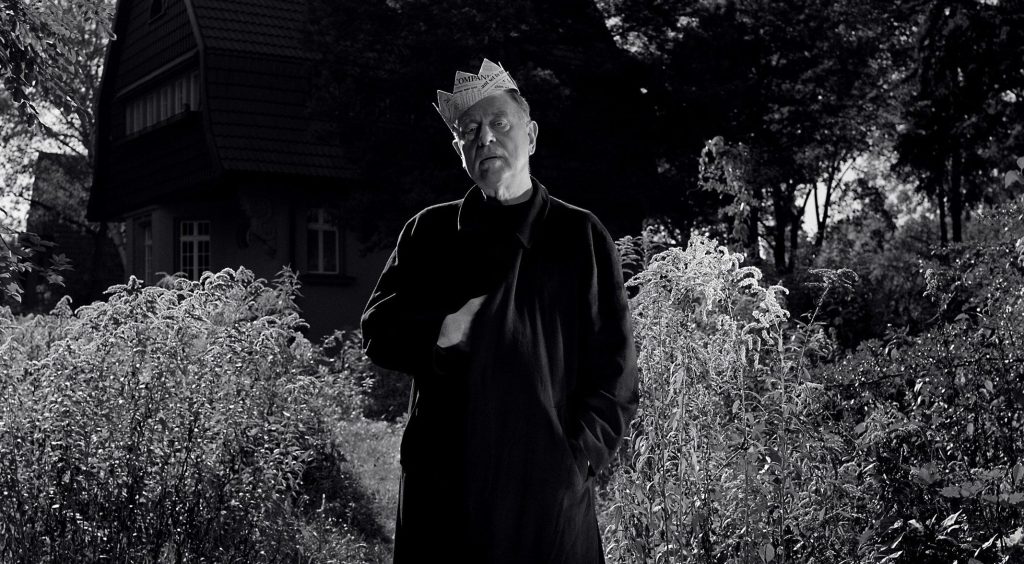
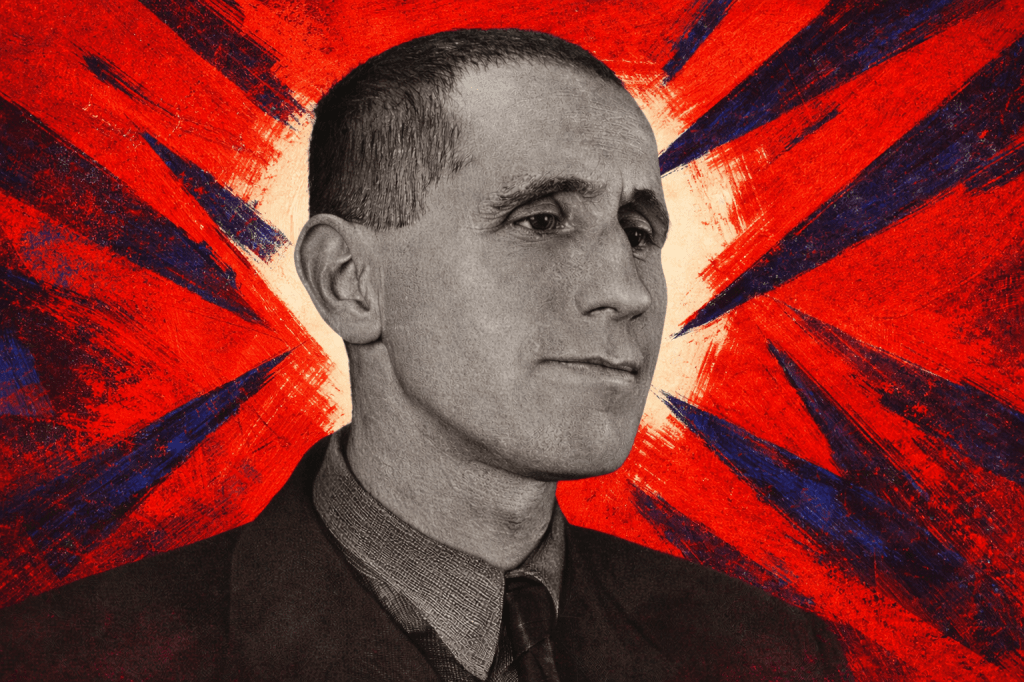
Photo credit for image in article header: © Oliver Mark / CC BY-SA 4.0
 E-CIBS