

GSA 2026, Phoenix AZ September 24-27
Tuis and “Ui”s: Brecht’s Satire of Intellectuals in Times of Crisis GSA 2026, Phoenix AZ September 24-27 At a moment of open gangsterism at the heights of state power, much attention has shifted to Brecht’s criminal figures: clever thugs whose clownish brutality both diagnoses and satirizes the fascist pathology. Arturo Ui, Mackie Messer, and Gogher Gogh figure as recurring dangers to the weakening social orders attached to capitalist rackets in decline: the cauliflower trade in Gangland Chicago, the corruption in Victorian England, the cotton trade in Imperial China, etc. Attached to this “Ui”-type, a Brechtian topos both before and after his emigration from Germany in the wake of the Reichstag fire, was a similarly long-gestating interest in the figure of the “Tui.” The Tui, elaborated in both Turandot and the fragmentary Tui-Roman, is a caricature of the intellect in service to the ruling order.
In Turandot, both Tuis and an Ui-figure (Gogher Gogh) attempt to deal with a contradiction in the running of the imperial cotton racket: a bountiful harvest needs to be made scarce, so that cotton can be sold at a profit. The Tuis generate their opinions to order, whether in the penny-stock-like hawking of fashionable opinions to passers-by, or when commissioned by the emperor. Gogher Gogh, a jumped-up bandit and failed applicant to the Tui Academy, resorts to terrorizing the Tuis, burning cotton storehouses, and criminalizing dissent. Both “Ui” and “Tuis” run into the problem of material reality: neither intellectual sophistry nor fascist terrorism can deflect the question of the missing cotton, and the play ends with the masses outside the palace, led by the mysterious Kai Ho, a person maligned in the work of the Tui think-tanks as an enemy of liberty and personal freedom.
Brecht’s Tui has long baffled critics: initial responses to Turandot in 1969 could not make out whether Brecht’s critique referred to Eastern-bloc Communist functionaries, by-gone Weimar intellectuals, or the contemporary academe of West Germany and the United States. Brecht’s preface specified that he wrote of reason at its twilight. At a time when the university and intellectuals are under attack once again as “un-American,” revisiting Brecht’s caustic view of the intelligentsia may seem an odd choice. Yet in Brecht’s estimation, the dreary recurrent Weimar-cabaret of the rise of fascism had to be understood in tandem with both the corruption and the persecution of the intellect. This panel seeks to update our understanding of the Tui-cycle, especially as it pertains to Brecht’s exile in American society, his view of intellectuals and class-struggle, and the question: how can we think about Brecht and anti-intellectualism? How can we read the Tui-critique during a time of collapsing intellectual freedom?
We are interested in submissions on Brecht’s Tui-critiques and on related topics such as:
● Brecht as critic of the Frankfurt School, or the Frankfurt School’s critiques of Brecht
● Brecht before the HUAC and American anti-Communism alongside American antiintellectualism
● Intellectuals and class-struggle and Brecht in comparison with other theories of the intellectual class (e.g., Gramsci, Benjamin, Edward Said, Agamben)
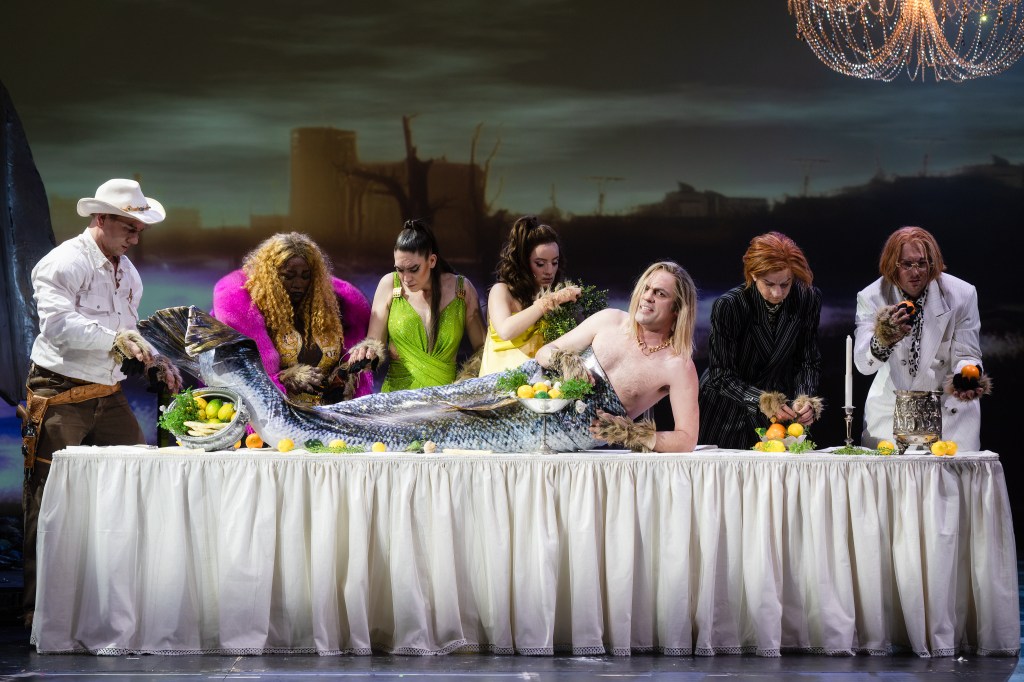
● Stagings of the Tui since 1969
● The Tui-Ui connection: Intellectuals and fascism
● Brecht’s positive vision for the intellect, especially as explored in Turandot. What remains for thinking, reading, and “Kopfarbeit,” beyond the Tui-critique?
Please submit 250-word proposals and brief biographical details to twgoulding[at]uchicago.edu by March 6, 2026.
For more information, contact Tommy Goulding (twgoulding[at]uchicago.edu) or Curtis Swope (cs131[at]wellesley.edu).
To be a panel participant, presenters must become members of the German Studies Association before 18 March 2026.


 E-CIBS