
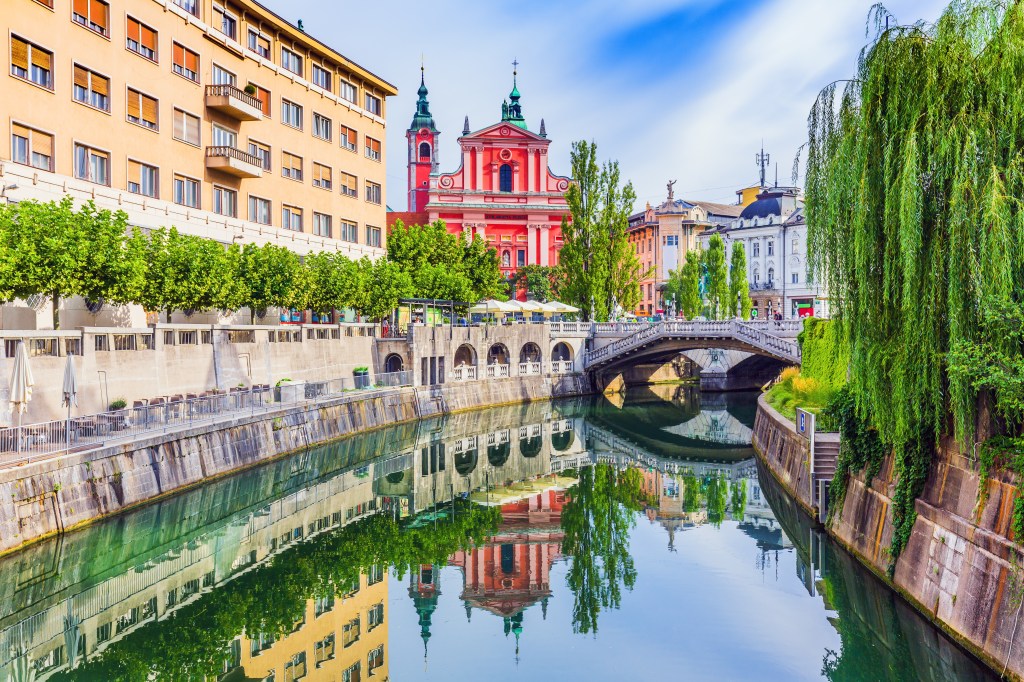
The International Amfiteater Symposium
Speech on the (Dark) Times: Brecht’s Thought Then and Now
6–9 October 2026
Ljubljana, Slovenian Theatre Institute
Call for Proposals
In a brief yet extraordinarily lucid fragment from Buying Brass, entitled “Speech on Our Times” (Rede über die Zeit), Bertolt Brecht offers a precise analysis of the social conditions shaping his historical moment, not merely in Germany but globally. In the fragment, a character bearing the generic name Philosopher observes that “the monstrous oppression and exploitation of human beings by other human beings, the wartime slaughters and peacetime degradations of every sort taking place across the planet have almost come to seem natural to us”. Despite the historical distance, this observation still resonates as an uncannily accurate commentary on the conditions of our contemporary moment, marked by capitalist exploitation, violence against (not only human) lives, war and the climate crisis. We live in a time in which numerous regressive, increasingly popular and even institutionalised forms of authoritarian (micro-)politics are gaining ground, recalling the dark forces of past eras. These politics are rooted in racism, chauvinism, nationalism, xenophobia, transphobia, homophobia, sexism, class discrimination, ruthless exploitation, (neo-)colonialism, religious fundamentalism, environmental degradation, militarism and more.
“We don’t control things, it seems − things control us,” says Brecht’s Philosopher, continuing: “But that is only because some people use things to help them control other people.” This domination and subjugation – economic, political, ideological and otherwise – is usually concealed, opaque and difficult for many to grasp. Hence the conclusion that “a great deal of thought and organization is needed in order to shed some light on people’s social behaviour”.
It is precisely for this reason that we invite participants of the forthcoming Amfiteater Symposium to reflect on the question of what Brecht’s “speech on the times” would be today, and what might ours be? The time of which Brecht speaks is a “dark” one – so dark that even “a talk about trees is almost a crime / because it implies silence about so many horrors” (“To Those Born Later”). How might Brecht’s historical experiences and his often subtle and lucid reflections help us understand why our own time, too, appears to be becoming increasingly “dark”? And, at the same time, how might we contribute to the creation of different conditions in which a talk about trees, about theatre, or about this or that, will no longer be a crime because the times themselves will be brighter than they are today?
When, in the mid-1920s, Brecht began writing the play Joe Fleischhacker, in which he sought to investigate the destructive effects of capitalism and the mechanisms driving financial businesses, he realised that existing theatrical means were no longer adequate for such a task. “Petroleum,” he remarked laconically in a Berlin newspaper, “resists the five-act form.” “If our present-day world no longer fits drama,” he told his collaborator Elisabeth Hauptmann almost exactly one hundred years ago, “then drama no longer fits the world.” Brecht thus began to develop a “drama of major subjects”: epic theatre. From its very beginning, Brecht’s theatrical project appears to have been conceived as an attempt to enable theatre to respond to – and even intervene in – its historical moment. The symposium will provide an opportunity to reflect on what an effective theatrical and/or Brechtian response to our time might look like today – a time marked by neoliberalism and the rise of authoritarian politics.
Some of the themes and questions we wish to address:
- What difficulties confront us today in writing the truth (cf. Brecht’s text “Five Difficulties in Writing the Truth”), at a time when knowledge is being reduced to an overload of (often trivial) information, fake news, conspiracy theories, artificial intelligence and various forms of manipulation? What if Brecht’s assumption that there is a “cleverness to recognise it, even though it is disguised everywhere,” has turned into its opposite, and there is now a “cleverness” to ignore truths that are in fact obvious (i.e., global warming, the global domination of billionaires, etc.)? Is it still possible to confront this contradiction with his concept of estrangement?How can people be encouraged to return to seeking the truth and to cease acting against their (supposedly) objective interests? Which strategies might be employed in response – both in theatre and in other public spheres: in art, politics, theory, activism and beyond?
- What does the dystopian character of the present time mean for Brecht’s ideal of a “theatre of the scientific age”, whose social context is now shaped by the commodification of knowledge, the suppression of critical thought, “surveillance capitalism” (Zuboff) and the mass use of social media (where lies and prejudices are spread faster than facts)? What are we to make of Brecht’s media-theoretical optimism at a time in which monopolist platforms are transforming the internet from the ultimate “apparatus of communication” (cf. his “The Radio as an Apparatus of Communication”) into an “apparatus of distribution” – and control?
- What is the role and structural position of playwriting and theatre within such a transformed, high-tech reality? Can our world (still) “be reproduced by means of theatre” as Brecht wondered in 1955? How, in this context, are we to understand Brecht’s linking of “learning” and “cognition” to playwriting and theatre? And what might contemporary “learning plays” (Lehrstücke) look like?
- Increasingly prevalent micro-fascisms strive at all costs to preserve existing (hegemonic, dominant and traditional) forms of life while violently suppressing what is foreign and different. In this context, the estrangement effect (Verfremdungseffekt), which operates in precisely the opposite direction, turning the usual, familiar or taken-for-granted into something peculiar, strange and alien, seems particularly promising. But contemporary autocrats – even within formally democratic regimes – no longer conceal their dictatorial ambitions. Can the Verfremdungseffekt still have any impact under such conditions? Or does the perverse familiarity of such horrific forms of rule call for new and more radical estrangements?
- In Refugee Conversations, Brecht remarks that exile is the best possible school for dialectics and that refugees are the sharpest dialecticians. Who are the contemporary exiles – not necessarily only in a physical sense but also politically, ideologically, epistemologically, in terms of class, gender, race, language, etc.? How can the “figure of the stranger” be understood as a structural position of enunciation and comprehension of the contemporary world in drama, poetry, theatre and more broadly, in the public sphere?
- In his text “Material Value”, Brecht argued that classical and canonised authors should not be treated with excessive reverence or piety, as this would turn them into unusable museum artefacts. For this reason, we will ask how to approach Brecht in the same, Brechtian manner. How might a “canonised” Brecht be critically reread today so that his well-known concepts can be reconsidered? How might these concepts be employed in contemporary theatre, literary and other artistic practices and with what effects? Last but not least, what might be the material significance of his theatrical and epistemological project for contemporary times?
At the symposium, we will thus explore the relationships between art (theatre, playwriting, literature, etc.) and the contemporary social and political context and seek potential theatrical and other tactics capable of following Brecht’s maxim in The Measures Taken (and Buying Brass): “Change the world, it needs it!” For this reason, we invite submissions for papers that will stimulate symposium discussions on Brecht through a broad range of conceptual frameworks and within an open epistemological field of diverse theoretical approaches – from philosophical, sociological, theatre-theoretical and philological to decolonial, feminist, ecological, queer and others. The aim of the symposium is to reflect, through Brecht and the questions raised by “Speech on Our Times”, not only on his but also on our own contemporary “dark times”.
References
Brecht, Bertolt. Brecht on Art and Politics, ed. by Tom Kuhn and Steve Giles. London: Bloomsbury, 2003.
Brecht, Bertolt. Brecht on Performance: Messingkauf and Modelbooks, ed. by Tom Kuhn, Steve Giles and Marc Silberman. London: Bloomsbury, 2014.
Brecht, Bertolt. Brecht on Theatre, ed. by Marc Silberman, Steve Giles and Tom Kuhn. London: Bloomsbury, 2015.
Brecht, Bertolt. The Collected Poems of Bertolt Brecht, ed. by Tom Kuhn and David Constantine. New York: Liveright Publishing Corporation, 2018.
Brecht, Bertolt. Werke. Große kommentierte Berliner und Frankfurter Ausgabe. Berlin: Aufbau and Frankfurt am Main: Suhrkamp, 1989–1998.
Brecht, Bertolt. “Unsere Hoffnung heute ist die Krise”: Interviews 1926–1956, ed. by Noah Willumsen. Berlin: Suhrkamp, 2023.
Fisher, Max. The Chaos Machine. The Inside Story of How Social Media Rewired Our Minds and our World. New York: Little, Brown and Company, 2022.
Hao, Karen. Empire of AI. Dreams and Nightmares in Sam Altman’s OpenAI. New York: Penguin Press, 2025.
Kebir, Sabine. Ich fragte nicht nach meinem Anteil: Elisabeth Hauptmanns Arbeit mit Bertolt Brecht. Berlin: Aufbau, 1997 [2. Auflage, 2006].
Srnicek, Nick. Platform Capitalism. Cambridge: Polity Press, 2017.
Zuboff, Shoshana. The Age of Surveillance Capitalism: The Fight for a Human Future at the New Frontier of Power. London: Profile Books, 2019.
We invite you to join us with papers addressing the themes and questions highlighted in the symposium’s introductory text – as well as other topics that, in your view, raise significant questions about the relevance of Brecht’s thought for our contemporary moment – at the international symposium to be held in Ljubljana from 6 to 9 October 2026. The working language of the symposium will be English. The time allocated for a paper is 20 minutes, plus 10 minutes for discussion.
Please send the title and the abstract of your paper (up to 250 words) together with a short bio (up to 120 words) in English by 3 April 2026 to amfiteater@slogi.si. You may also direct any additional questions to this address. Notifications of acceptance will be sent by 24 April 2026.
Authors of accepted papers will be invited to develop their presentations into full articles for publication in Amfiteater journal’s first issue of 2027. All articles will be peer-reviewed prior to publication.
Heads of the symposium: Aldo Milohnić and Jakob Ribič
Organising committee: Aldo Milohnić, Maja Murnik, Jakob Ribič, Tomaž Toporišič, Gašper Troha, Markus Wessendorf and Noah Willumsen
Contact:
Maja Murnik
Slovenian Theatre Institute (SLOGI)
Mestni trg 17, 1000 Ljubljana, Slovenia
E: amfiteater@slogi.si
The symposium is organised by:
The Slovenian Theatre Institute (SLOGI) is a national public institution founded in 2014 as the legal successor of the Slovenian Theatre Museum. The institute’s mission is to develop theatre culture and promote theatre art through the research, study, interpretation, promotion, preservation, documentation and presentation of Slovenian theatre culture, theatre heritage and theatre art in the Slovenian and international context.
The Academy of Theatre, Radio, Film and Television of the University of Ljubljana (UL AGRFT) performs educational, artistic and research work in the fields of theatre, radio, film and television. From its founding in 1945 to 1975, it operated as an independent higher education institution with a rector and then became a member of the University of Ljubljana.
Amfiteater – Journal of Performing Arts Theory is an academic journal that publishes original articles on performing arts with a broad spectrum from dramatic theatre, drama, dance, performance and hybrid art forms. Authors can analyse the forms and content of artwork and art phenomena from the field of performing arts, their history, their present and their future, as well as their relationship to other art forms and the broader (social, cultural, political …) context.
In collaboration with:
Bertolt-Brecht-Archiv, Akademie der Künste, Berlin
The symposium is being organised within the framework of the research programme UL AGRFT Theatre and Interart Studies (P6-0376), co-financed by the Slovenian Research and Innovation Agency (ARIS) from the state budget.
 E-CIBS