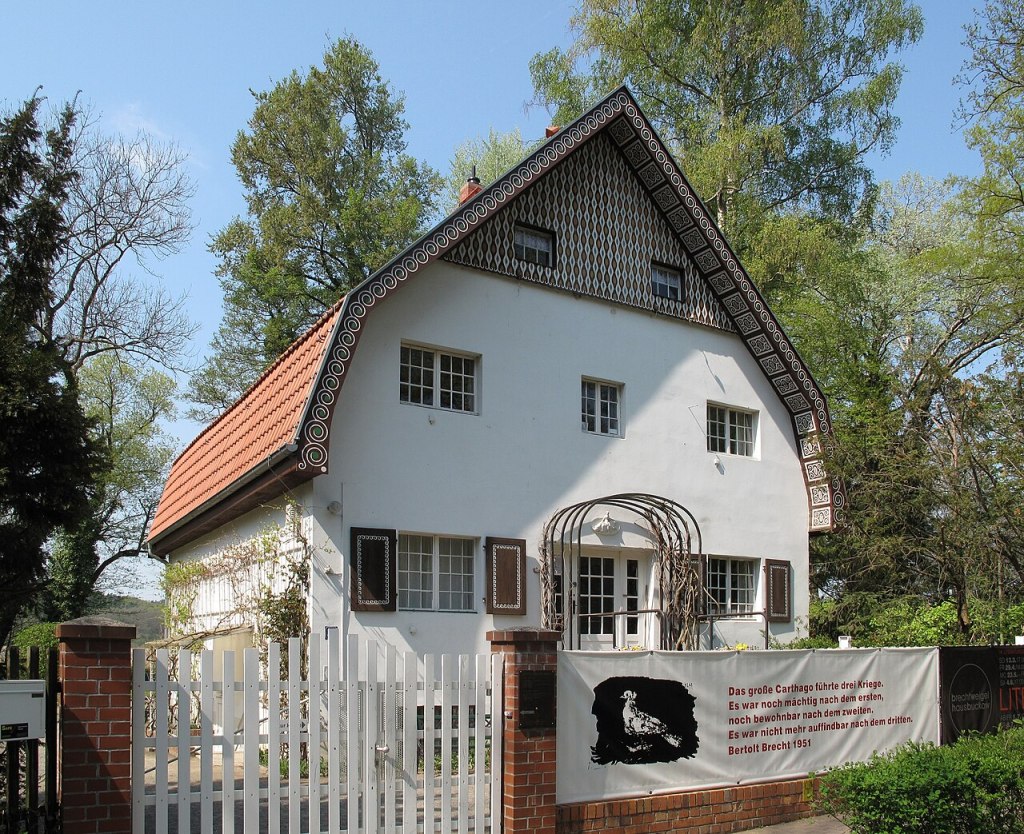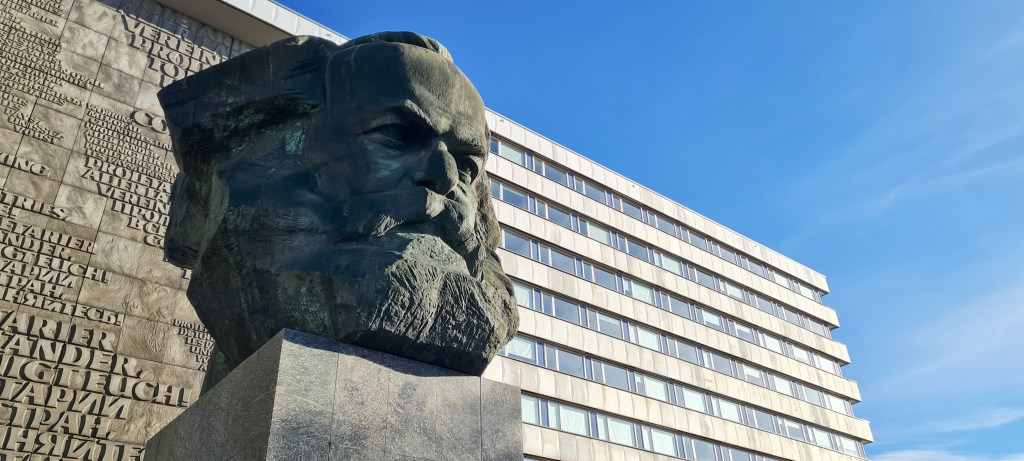

Victoria is a city located on ancestorial lands of the Lək̓ʷəŋən (Songhees and Xʷsepsəm/Esquimalt) Peoples, on the southern tip of Vancouver Island in British Columbia, Canada. It is a lovely city of lush gardens, surrounded by stunning natural beauty – the sea, mountains, and forests. As the capital of a province heavily affected by wildfires and flooding, it is also the site of consequential decisions on environmental policies as well as of massive protests against the degradation of both Indigenous rights and the environment through the endangerment of salmon, whales, and other species, logging and mining practices, damming of rivers, and pipeline construction.
Victoria was therefore perfectly suited as the location of “Brecht in the Anthropocene”, the 18th Symposium of the International Brecht Society, which took place on the campus of the University of Victoria from 22 to 26 July 2026, convened by Elena Pnevmonidou (University of Victoria) and Kristopher Imbrigotta (University of Puget Sound). As the title suggests, the symposium was focused on exploring the meanings and relevance of Brecht’s work in our era of epochal human impact on the earth, climate change, and ecological crises. We two editors of E-CIBS participated in the symposium in different ways – Joerg Esleben in person, and Anthony Squiers online. This report is based on our experiences of the event.
Pre-Symposium Workshop (19-21 July)
The symposium proper was preceded by a three-day workshop on “Climate Disaster Survival Stories” offered jointly by Sean Holman and Chelsea Haberlin. Holman is the Wayne Crookes Professor of Environmental and Climate Journalism at the University of Victoria and one of the initiators and leaders of the Climate Disaster Project, which gathers and publishes testimony from survivors of climate disasters worldwide. Haberlin is a theatre artist living in Vancouver, where she works as the Artistic Director of Neworld Theatre. She partnered with Holman and the Climate Disaster Project to produce the documentary play Eyes of the Beast, which uses verbatim testimony from the project; it premiered in 2025 and has won numerous awards.
I (Joerg Esleben) was one of the participants in the workshop. This was a unique and transformative learning experience for me. Over the course of the first two days, we learned from Holman about the principles and trauma-informed methods of the Climate Disaster Project and then applied these learnings in interviewing each other about our own experiences with climate disaster. On the third day, under the guidance of Haberlin and paralleling the process that was followed for Eyes of the Beast, we turned the testimony gathered through these interviews into playable theatrical scenes, which we subsequently performed to conclude the first day of the symposium.
Although (or perhaps because) we were only four participants in addition to the two facilitators, we had exceptionally rich and honest discussions and a true bonding experience in this shared opportunity to learn how to turn individual stories of ecological catastrophe into socially relevant theatre.
Day 1 (22 July)

After a socializing session for symposium participants on the evening of July 21st, the program began the next morning with welcoming remarks from the two convenors followed by a keynote lecture by IBS President Markus Wessendorf (University of Hawaiʻi at Mānoa) entitled “Towards a Brechtian Dramaturgy of the Anthropocene”. This tour d’horizon of conceptions of the Anthropocene and alternatives to the term, of theories thinking together ecology and culture, and of ecological aspects of Brecht’s work provided a useful framing for the symposium theme.
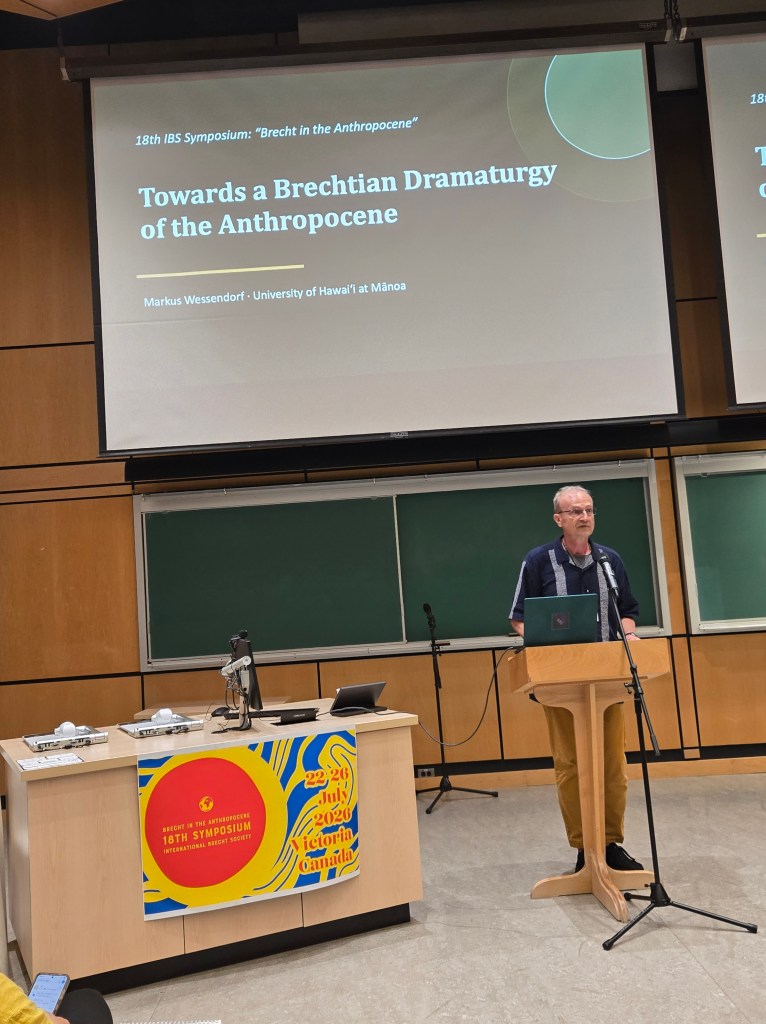
This was followed by parallel panels on revolution and gender in the film Kuhle Wampe, on critical gestures, humanity, and calls for action, and on a production of Brecht’s “Die Sintflut/The Flood”.
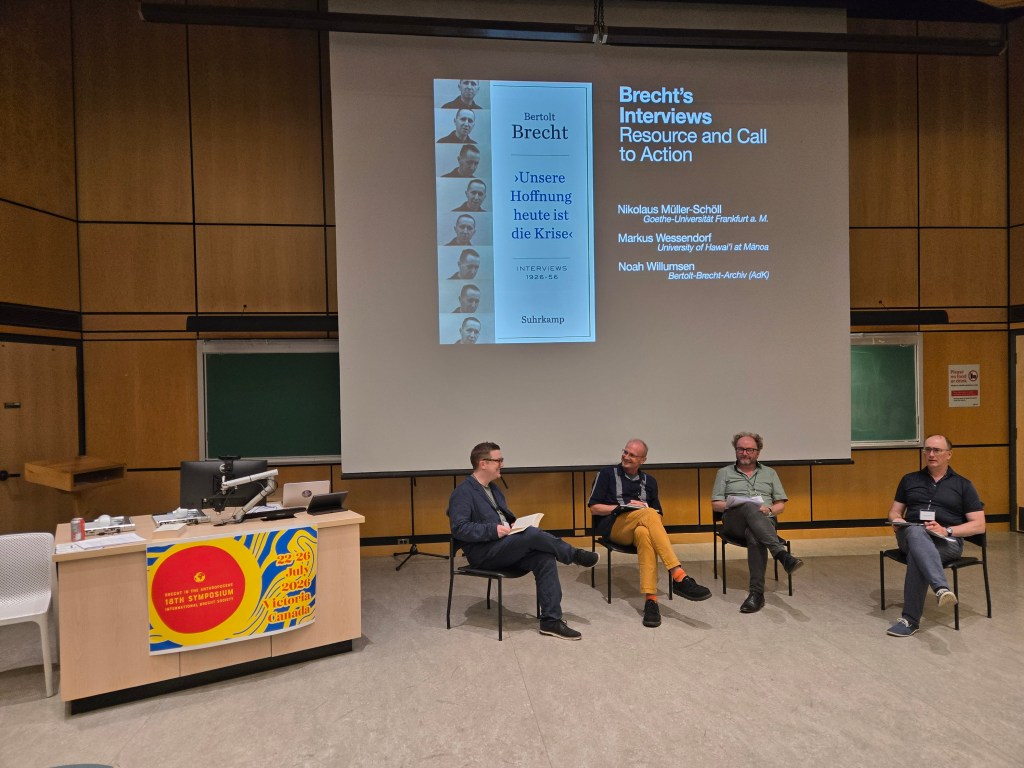
The afternoon program began with a book roundtable on the seminal collections of interviews with Brecht edited by Noah Willumsen (the Director of the Brecht Archive),“Unsere Hoffnung heute ist die Krise”: Interviews 1926-1956 (Suhrkamp, 2023). The book collects Bertolt Brecht’s incisive and often surprising responses to the urgent political and social questions of his time. The roundtable participants highlighted the decisive new impulses that the book has given Brecht research, particularly with regard to Brecht’s positioning as a public persona vis-à-vis the many crises he lived and worked through.
The academic program for the day concluded with parallel panels reporting on the Brecht-Tage 2026 in Berlin (which were focused on Brecht and the Green Revolution), exploring social relations and the non-human in some of Brecht’s works, and providing readings of others through queer and Black theoretical lenses. The first day concluded with the performance of the scenes we had developed during the climate disaster stories workshop, accompanied by comments from and discussion with the workshop convenors Sean Holman and Chelsea Haberlin.
Day 2 (23 July)
The second day began with a keynote address by Abhilash Pillai (theatre director, scholar, and Director of the School of Drama and Fine Arts, University of Calicut, Kerala, India) on “Brecht in the Capitalocene: Performing Resistance from the Global South”. The subtitle took on an unexpected additional meaning, because contrary to the initial plan, the keynote had to be delivered online from India, as Pillai did not receive a visa for Canada in time, although he and the convenors had applied for it well ahead of time. For me (Joerg Esleben) as a Canadian citizen, this is a telling and embarrassing example of the biases and inefficiencies in Canada’s consular policies and practices. Nevertheless, Pillai’s lecture on the concept of an ecological gestus and on reciprocal enrichment between Brecht’s ideas and South Asian performance traditions and practices was highly engaging and met with great interest in the audience.

The keynote was followed by parallel panels on opera and the Lehrstück in the Anthropocene, on nature and disaster in some of Brecht’s major plays, and on critical gestures in relation to ecology.
In the afternoon, Grischa Meyer (graphic designer and photographer, Berlin) presented a fascinating illustrated introduction to his animated reconstruction of Brecht’s exile journey from Scandianavia through the Soviet Union to the USA, based on Brecht’s journals, which also provided much of the source material for Meyer’s and Holger Teschke’s poster exhibition “Brecht’s Papierkrieg / Brecht’s Paper War”, which was exhibited throughout the duration of the symposium.
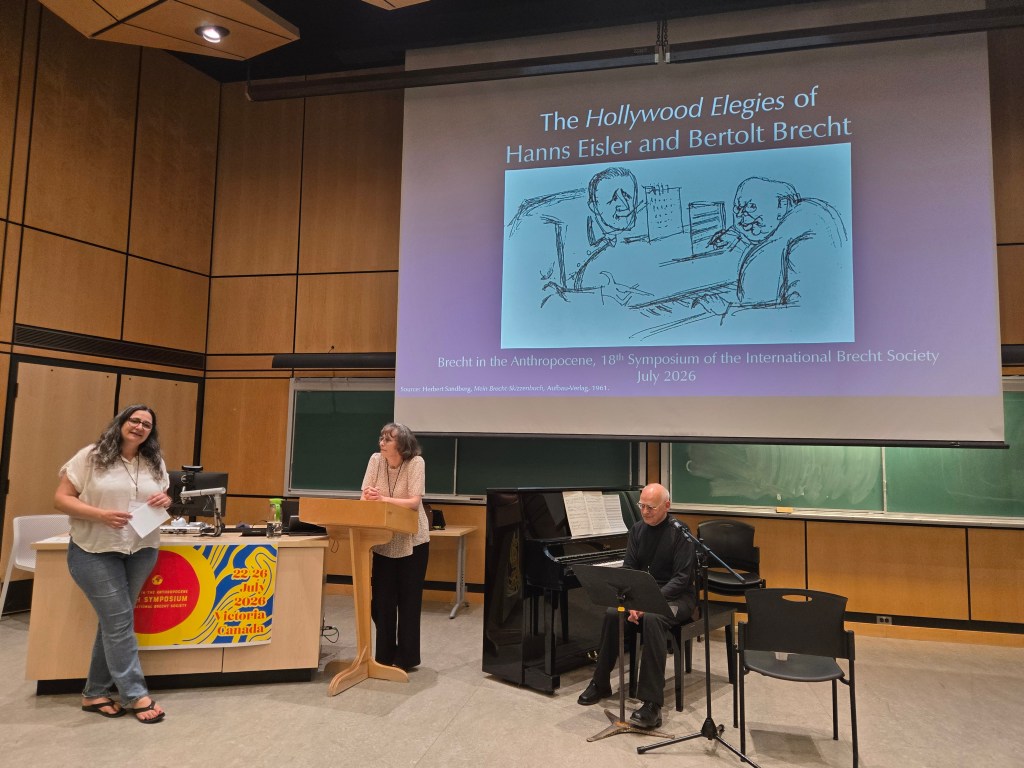
The evening brought two very different cultural events. The Victoria-based artists and scholars Sharon and Harald Krebs presented a lecture-recital (voice and piano) of Hanns Eisler’s and Brecht’s Hollywood Elegies, an engaging deep dive into the musical aspects of this joint creation.
The day concluded with a film evening showing rarely seen items from the DEFA Film Library: Das Lied der Ströme (dir. Joris Ivens, 1954), Der Schneider von Ulm (dir. Lutz Dammbeck, 1979), and Eine Hinterlassenschaft (dir. Peter Voigt, 2004).
Day 3 (24 July)
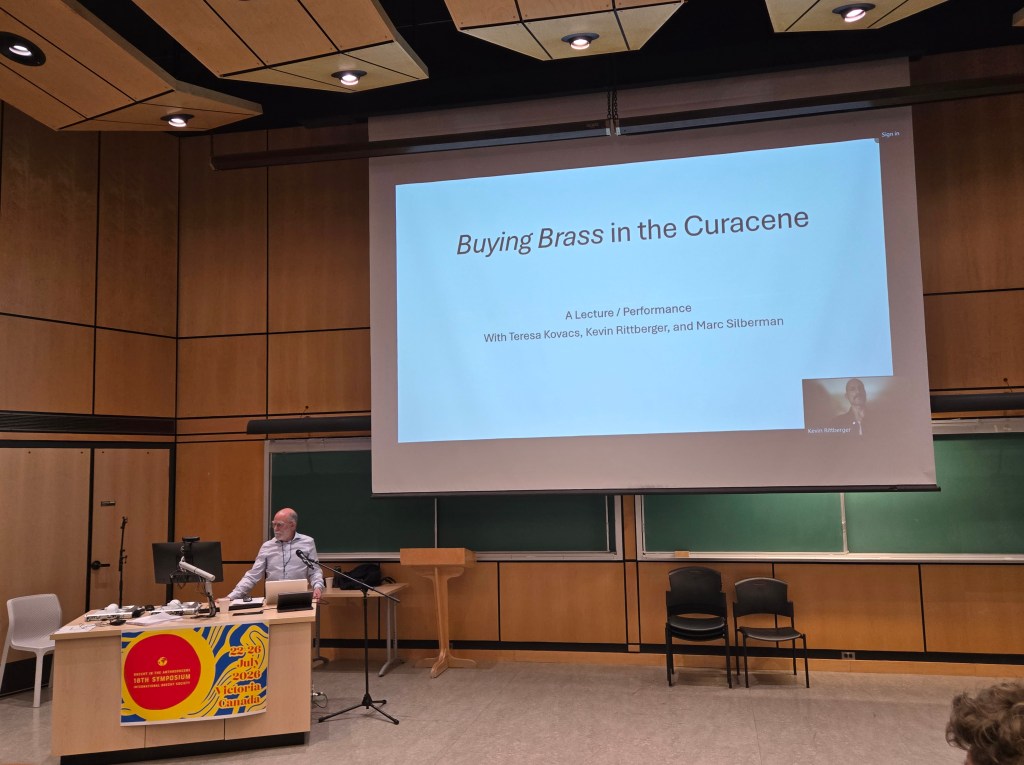
Day three started with a challenging, philosophically rich lecture by Marc Silberman / performance by Teresa Kovacs (Indiana University Bloomington) and Kevin Rittberger (author, director, and curator), both participating online, on their project Buying Brass in the Curacene, in which they bring Brecht’s Messingkauf Dialogues into contact with contemporary discourses on science, ecological catastrophe, the rights of non-humans, and healing.
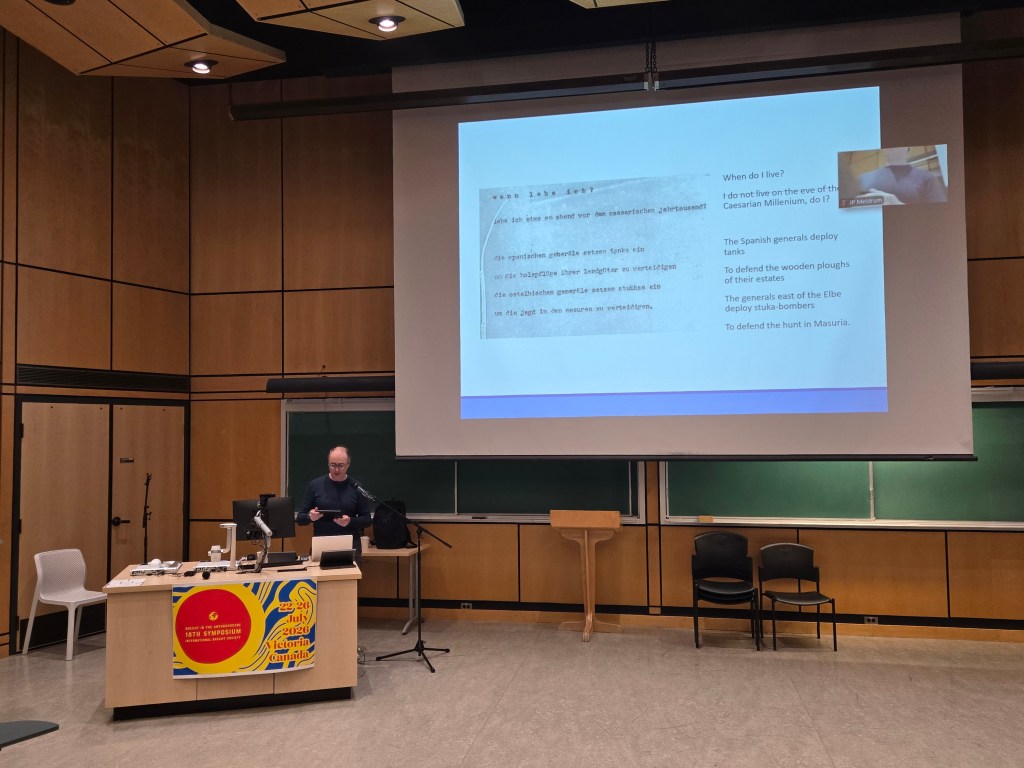
Next, Martin Revermann (University of Toronto) in his keynote lecture “Brecht and/on Time” provided a magisterial overview of conceptions and uses of time in Brecht’s work, with a particular focus on their relations to crisis and potential for ecodramaturgy.
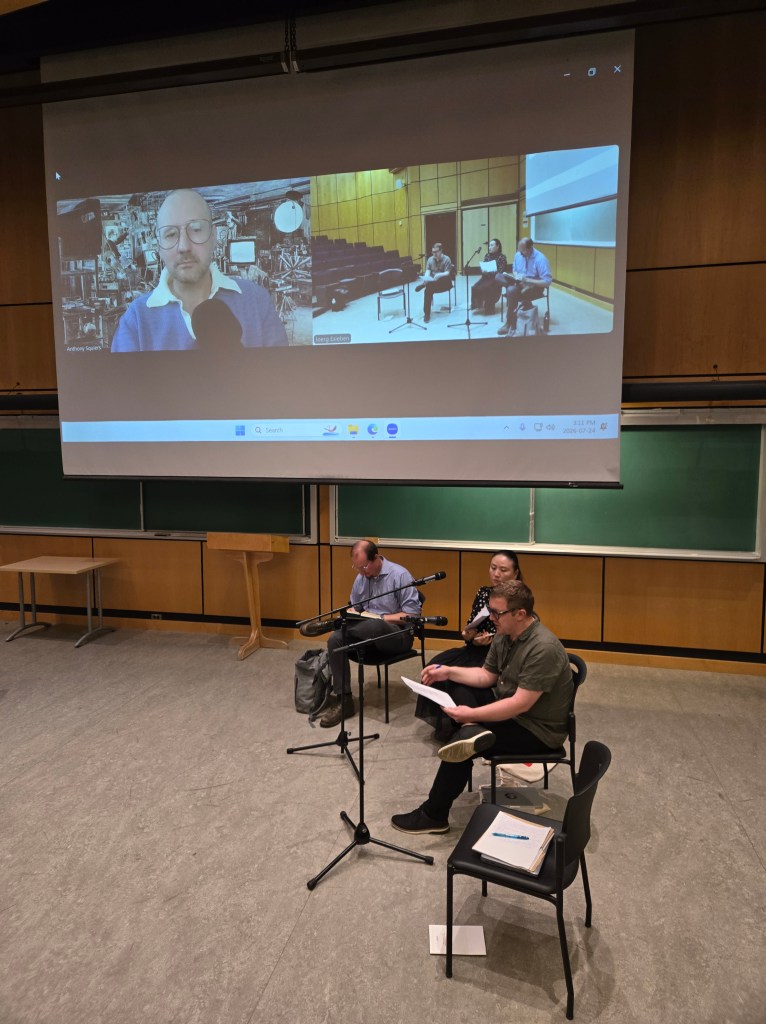
The afternoon program was kicked off by a lively roundtable discussion of Anthony Squiers’ book Bertolt Brecht’s Adaptations and Anti-Capitalist Aesthetics Today (Brill, 2025). The book examines Brecht’s theory and method of adaptation and reconstructs it into a single framework using four key Brechtian concepts. During the roundtable, participants discussed important points about Squiers’ arguments concerning Brecht’s conceptions and methods of adaptation, their historical specificity, and their applicability to the contemporary creation of politically engaged art.
This was followed by parallel panels on Brecht’s prose and environmental thought, on human potential, aesthetics, and praxis, and on relations between Brecht’s work and that of Paul Celan and Peter Weiss.
Day 4 (25 July)
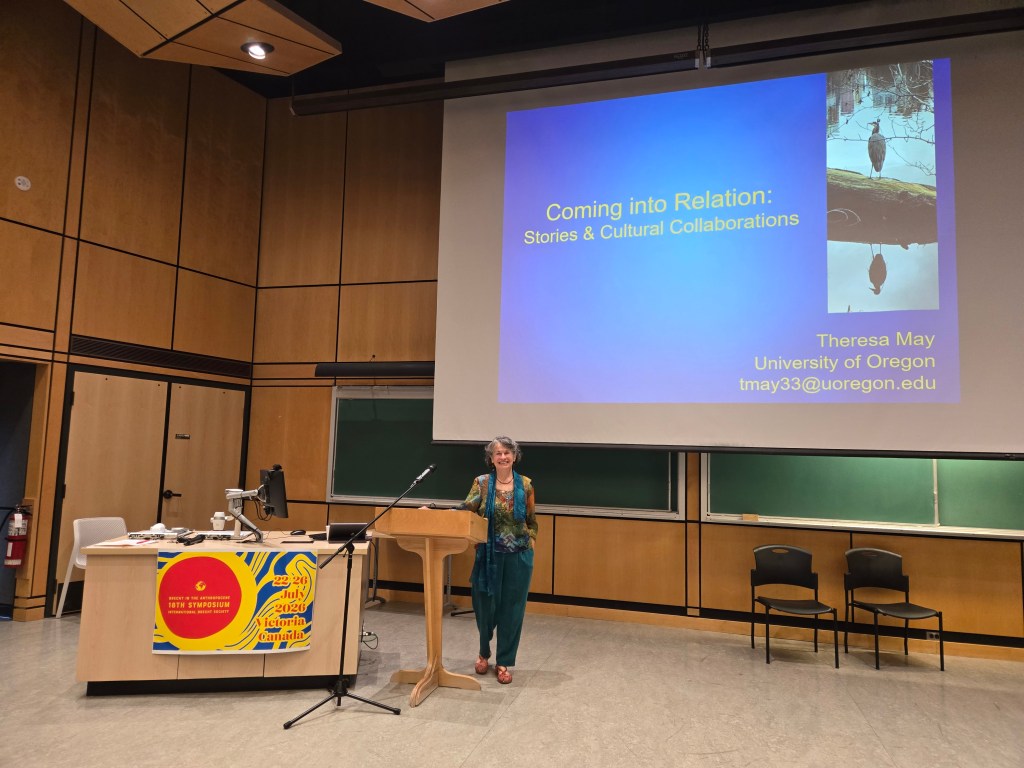
The final keynote lecture of the symposium was given by Theresa May (University of Oregon), playwright, director, professor, and originator of the seminal concept of ecodramaturgy, under the title “Coming into Relation: The Power of Stories in Cultural Collaborations”, in which she provided fascinating insights about her collaborations with Indigenous artists and communities addressing Indigenous land rights, uses of culture for healing, and environmental leadership.
This was followed by the IBS Business Meeting and then parallel panels on the relations of Brecht’s work to colonialism, exploitation, and crisis capitalism and to technology and science. The remainder of the afternoon should have been devoted to a workshop on Indian aesthetics, Brecht, and ecology by Abhilash Pillai, but this had to be canceled due to the visa issue discussed above, adding to the disappointment and outrage over this bureaucratic failure. Spirits were lifted, however, by the evening’s reception for symposium participants in the lovely premises of the UVic University Club.
Day 5 and Conclusion (26 July)
The final day of the symposium brought one more set of parallel panels on ecocritical storytelling and Brecht in Canada, on global capitalism and theory, and on mining regimes and justice in Mahagonny. Then it was time for a debriefing discussion about the symposium, where relevant organizational and content issues were raised, including weighing the pros and cons of hybrid (in-person and online) formats for the symposium. The official program having been concluded with the debriefing session, many of those participants who had not departed for home yet went on an excursion to the beautiful seaside hiking trail in East Sooke Regional Park, where we were reminded of the Indigenous stewardship of the land when we reached the Alldridge Point Petroglyphs.

After the nature outing, the day and symposium concluded with a final socializing session at a downtown Victoria pub. Speaking of socializing: This informal networking activity is one of the most important aspects of academic conferences, and the convenors ensured that it was given ample space in the program as well as outstanding culinary support; i.e., we had lots of time to chat between keynotes and panels and during lunch and dinner breaks, and the organizers provided amazing breakfast and lunch spreads, which contributed to the convivial atmosphere.


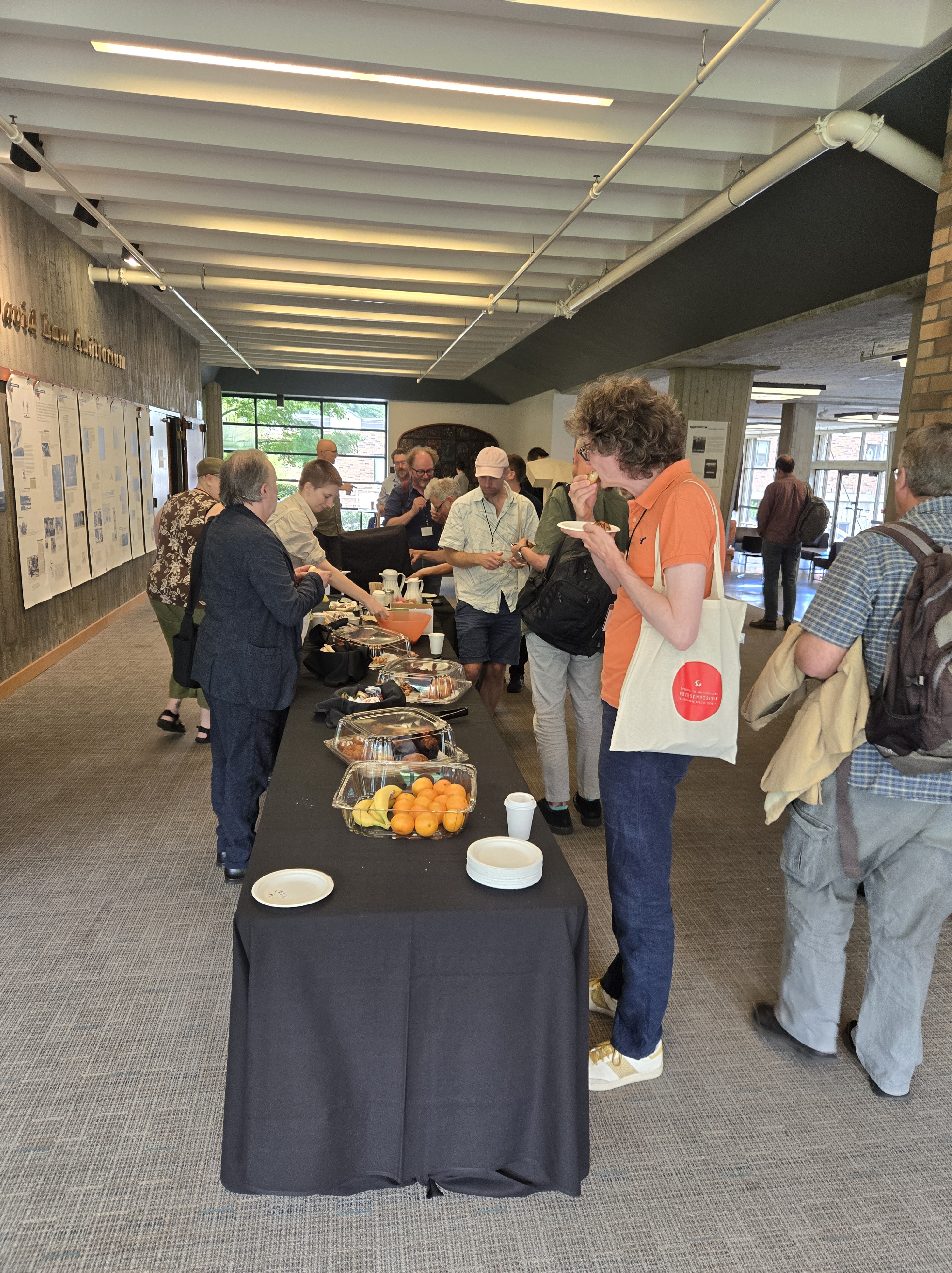
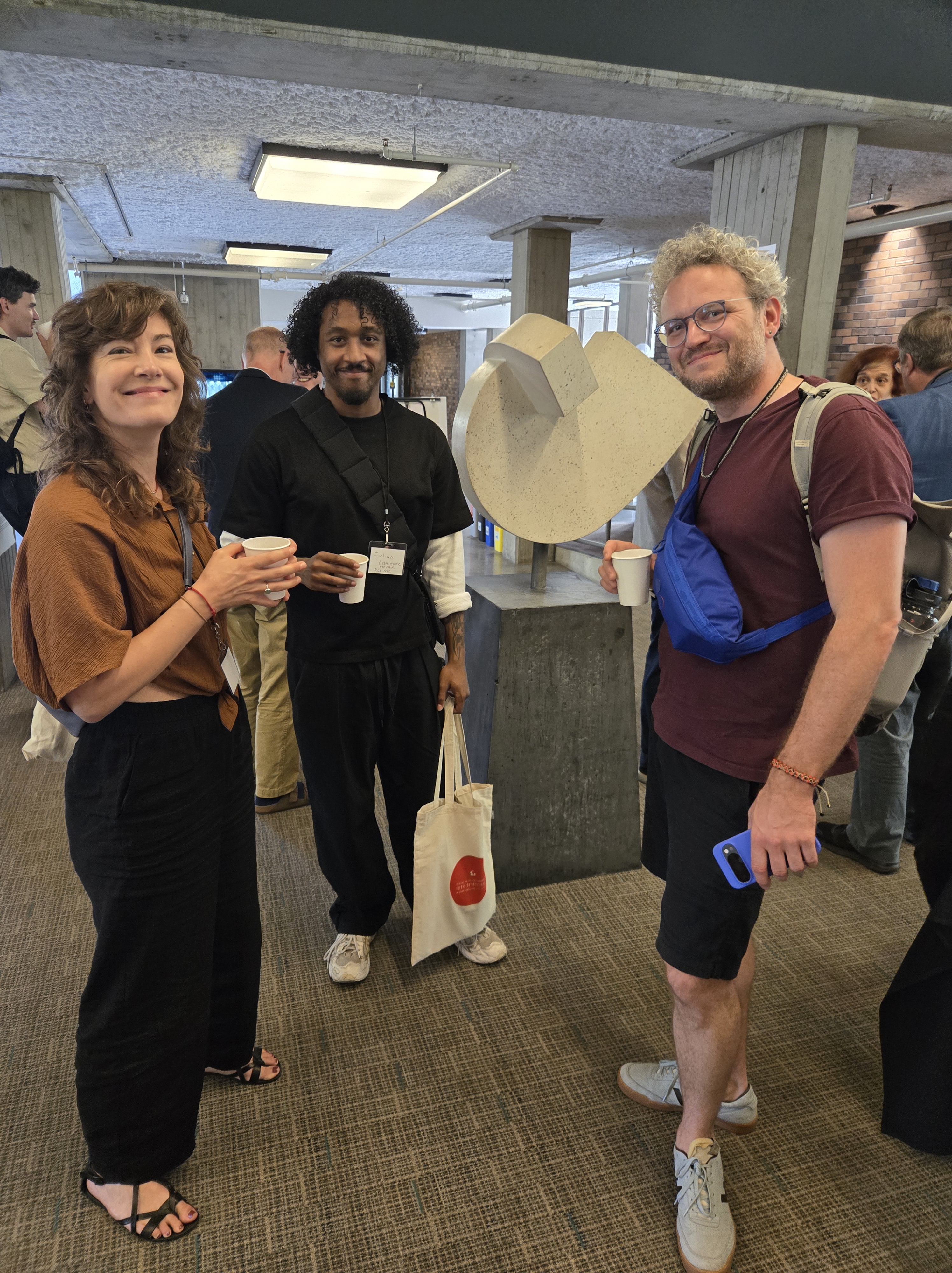
Participants mingle between sessions.
Elena Pnevmonidou and Kris Imbrigotta deserve deep gratitude from the symposium participants for putting together a brilliant and coherent program and, in the face of some technical, timing, and bureaucratic challenges, for their tireless work to keep the logistics of the gathering on track. Its significant intellectual outcomes, which pay homage to this work, will certainly resonate deeply with participants and will become widely apparent in the Brecht Yearbook and here in E-CIBS, the venues where many of the symposium contributions will be published.
The Abstracts Booklet can be found below.