Scholars and theatre practitioners from eight countries gathered at the Slovenian Theatre Institute in Ljubljana, Slovenia, from 6 to 9 October 2026 for the international symposium “Speech on the (Dark) Times: Brecht’s Thought Then and Now.” Organised by the Slovenian Theatre Institute, the University of Ljubljana’s Academy of Theatre, Radio, Film and Television, and the journal Amfiteater, the symposium was headed by Aldo Milohnić and Jakob Ribič. Through its combination of scholarship, lively debate and a stimulating cultural programme, the conference demonstrated Brecht’s continuing relevance to contemporary political struggles while challenging familiar assumptions about his thought and theatrical practice.
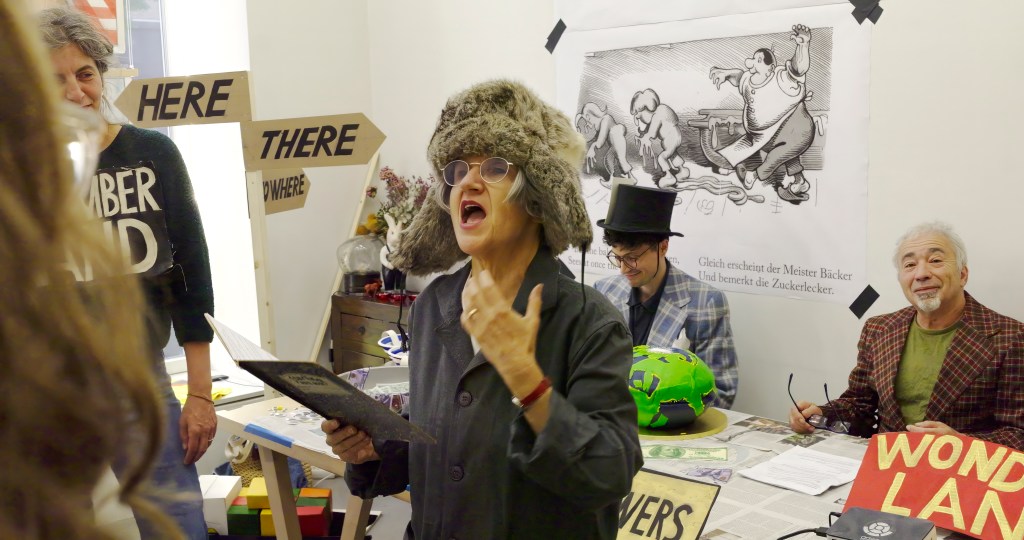
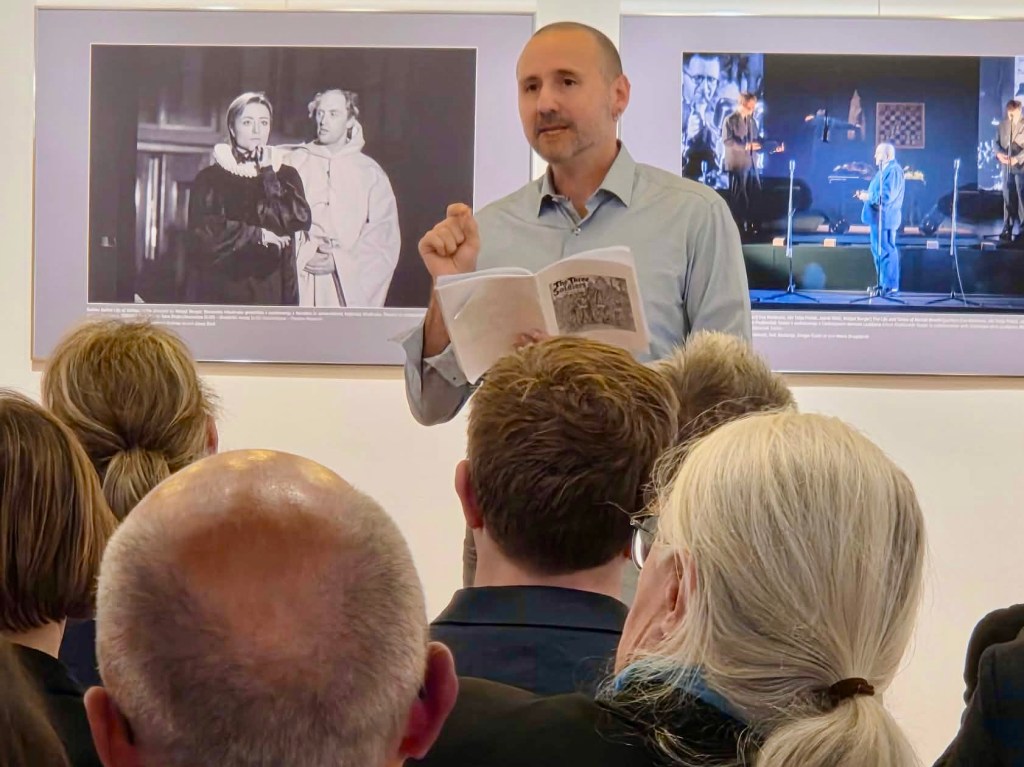
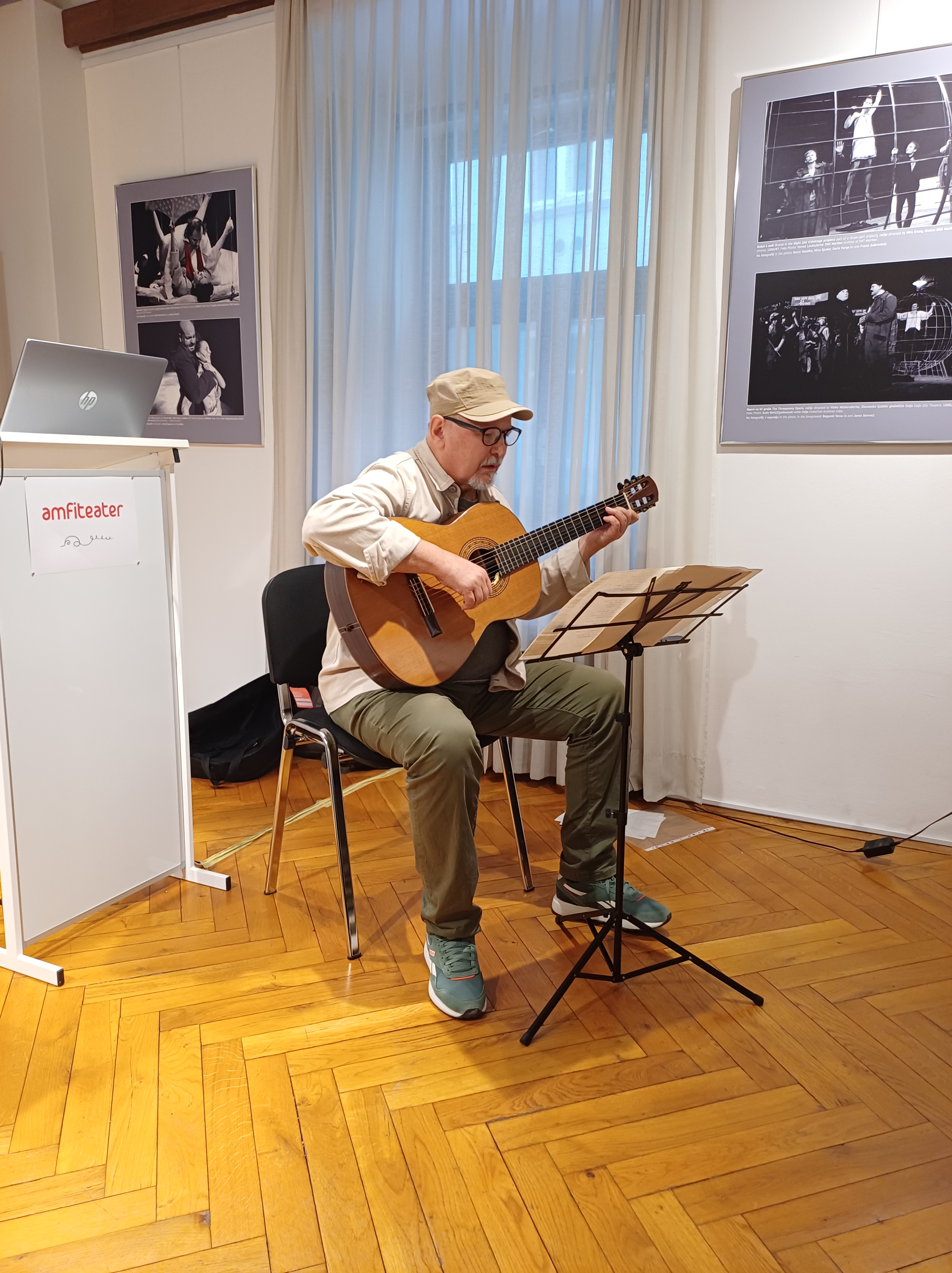
The programme opened on Tuesday, 6 October, with “Theatre Work: Brecht on Slovenian Stages,” an exhibition tracing Brecht’s reception and influence in Slovenia. Created by Milohnić, Ribič and Ana Perne, it followed a history beginning with Bojan Stupica’s 1937 production of The Threepenny Opera at Ljubljana’s national theatre, presented under the title The Beggar’s Opera. It also documented Brecht’s growing presence in Slovenian repertoires from the mid-1950s and his place in theatre education. Taking its title from Theaterarbeit, the book documenting the Berliner Ensemble’s productions, the exhibition situated Brecht’s theatrical methods within Slovenia’s own performance history. The opening ceremony featured songs by Brecht and Kurt Weill performed by Sofija Zavratnik Kain and a reading from his new English translation of Brecht’s poem, The Three Soldiers by this report’s author, Anthony Squiers. A welcome reception concluded the evening.
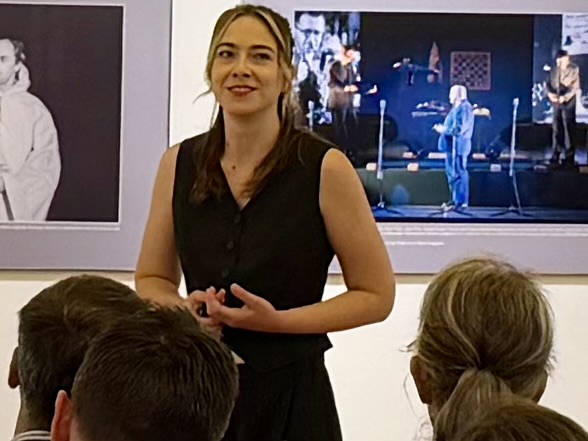
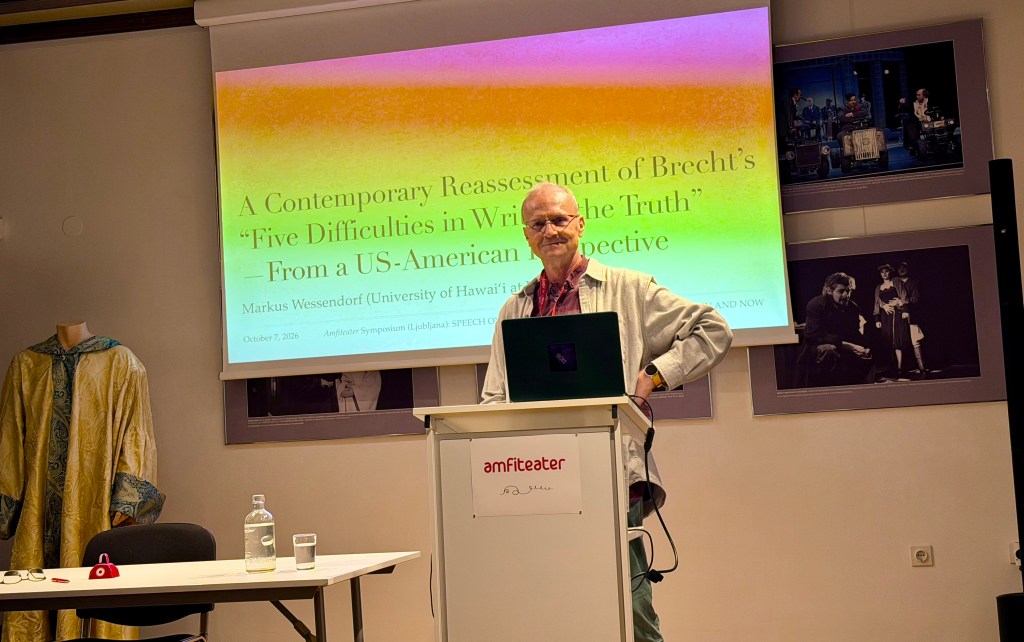
Wednesday’s academic programme began with a timely and incisive reassessment of “Five Difficulties in Writing the Truth” by Markus Wessendorf, president of the International Brecht Society, professor of theatre at the University of Hawaiʻi at Mānoa, former editor of The Brecht Yearbook (2018–2025) and editor-in-chief of Camden House’s Brecht Studies series. His keynote connected Brecht’s practical concerns about communicating truth to contemporary authoritarianism, concentrated media ownership and the effects of digital platforms and artificial intelligence on public knowledge. Its strength lay in showing how an essay written under the shadow of fascism continues to pose urgent questions for political communication. Subsequent panels examined exile and displacement through Refugee Conversations, representations of war and pacifism, capitalist social relations, and Brecht’s influence on contemporary political theatre.
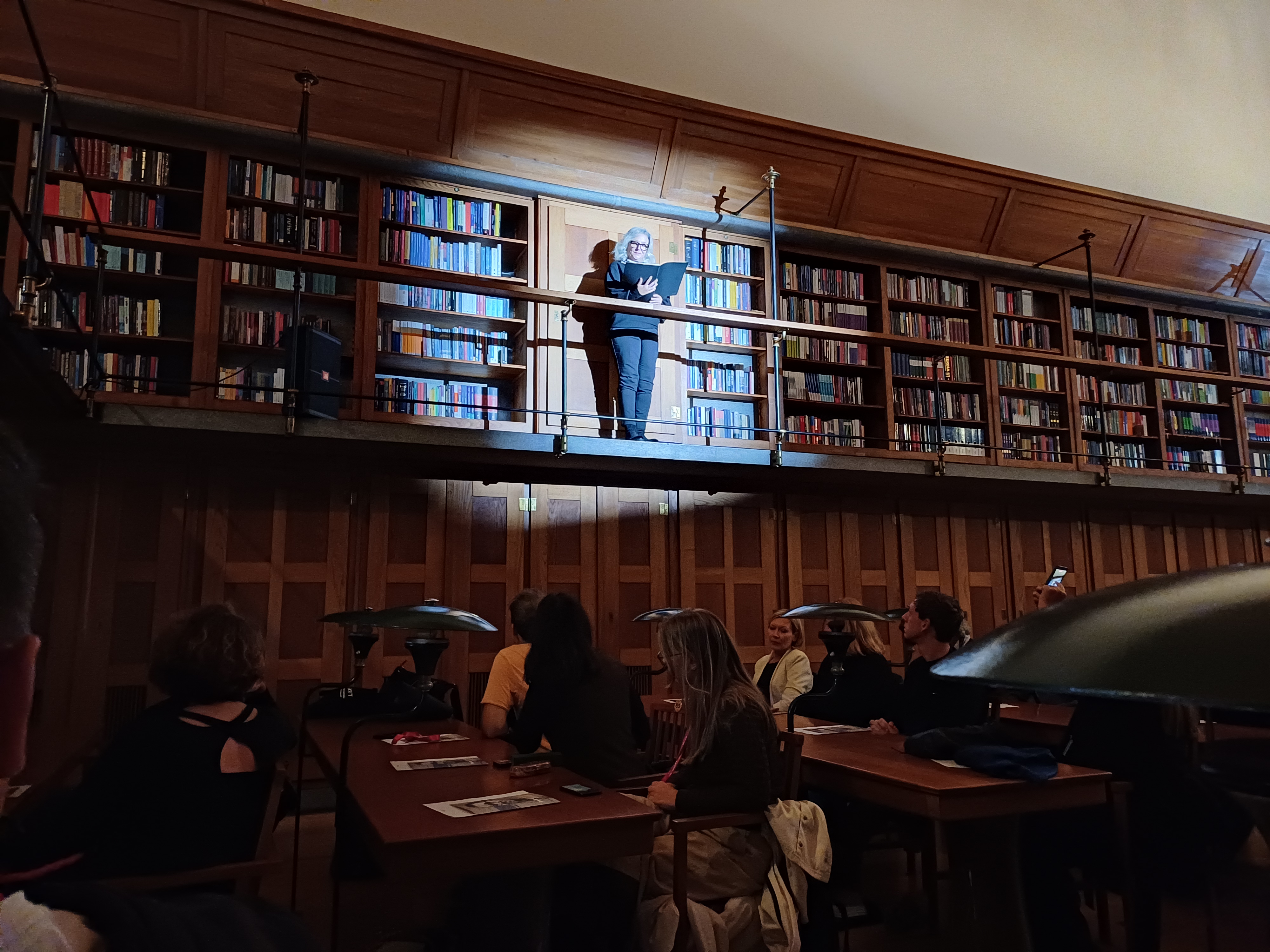
That evening, the National and University Library opened “Brecht’s Attempts and Experiments (Versuche),” bringing together Slovenian translations, first German editions and documents from the Bertolt Brecht Archive at the Academy of Arts in Berlin. Curated by Aldo Milohnić, Jakob Ribič and Barbara Jesenovec, the exhibition was produced by the library in collaboration with the University of Ljubljana’s Academy of Theatre, Radio, Film and Television, with archival advice from Iliane Thiemann, research associate in the archive’s manuscripts section, and Noah Willumsen, director of the Bertolt Brecht Archive. It placed Brecht’s writings within a history of publication, translation and reception, complementing the focus on theatrical production at the Slovenian Theatre Institute. Securing the Berlin archival materials was a major coup, giving the conference a valuable connection to the documentary record of Brecht’s work. The opening included further Brecht–Weill songs and Nataša Barbara Gračner’s return to excerpts from Galileo, which had been staged in the library 30 years earlier.
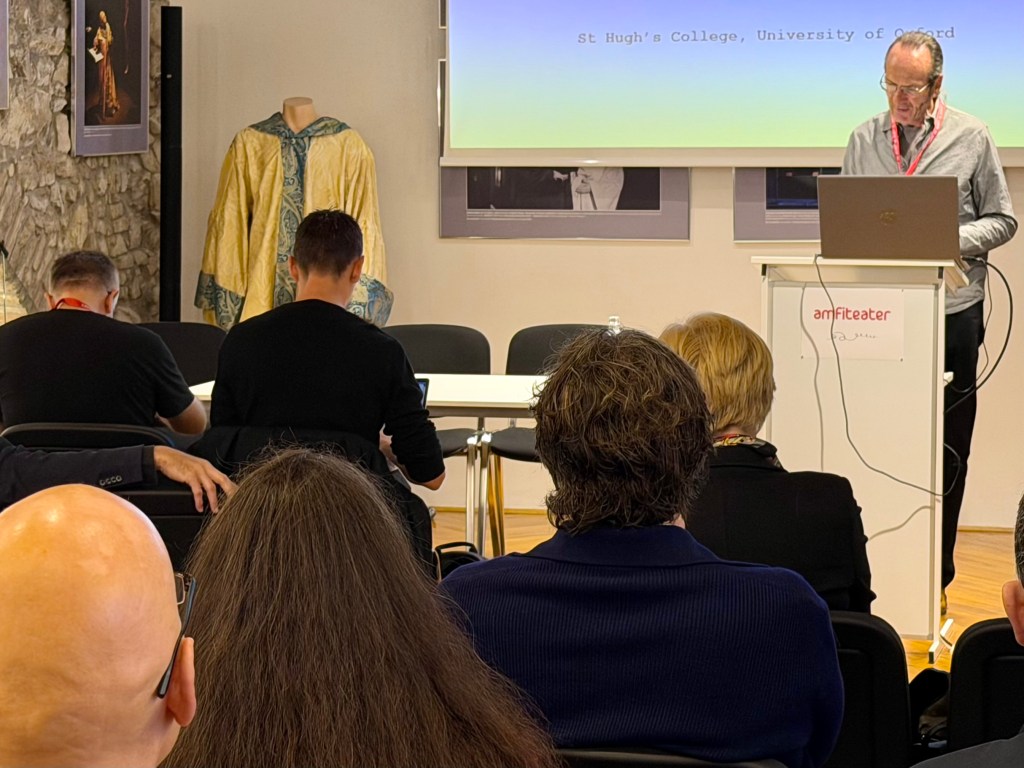
On Thursday, 8 October, Tom Kuhn, emeritus fellow of St Hugh’s College, Oxford, former professor of twentieth-century German literature and principal editor and co-translator of the English-language edition of Brecht’s works, delivered a thoughtful and nuanced keynote on Brecht, war and Einfühlung, commonly translated as “empathy.” Beginning with the poem “To the German Soldiers in the East,” he challenged the familiar assumption that Brechtian estrangement excludes emotional engagement. His close attention to the poetry illuminated the interplay between feeling and critical distance, offering a productive reconsideration of the emotional resources of Brecht’s work. Sessions that followed examined learning-plays and their contemporary applications, political censorship, and the relationship between Brecht and Aristotle. The latter panel, in which I participated, questioned established accounts of that relationship, including through my argument that Brecht’s break with Aristotle extended beyond aesthetics to ontology and logic.
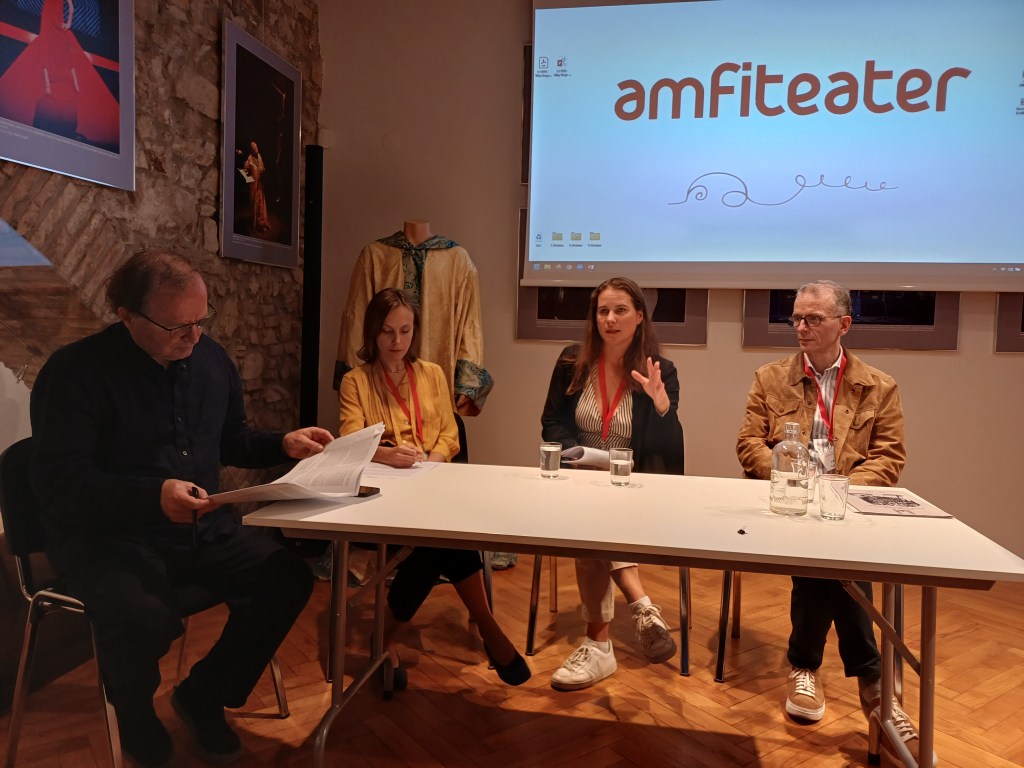
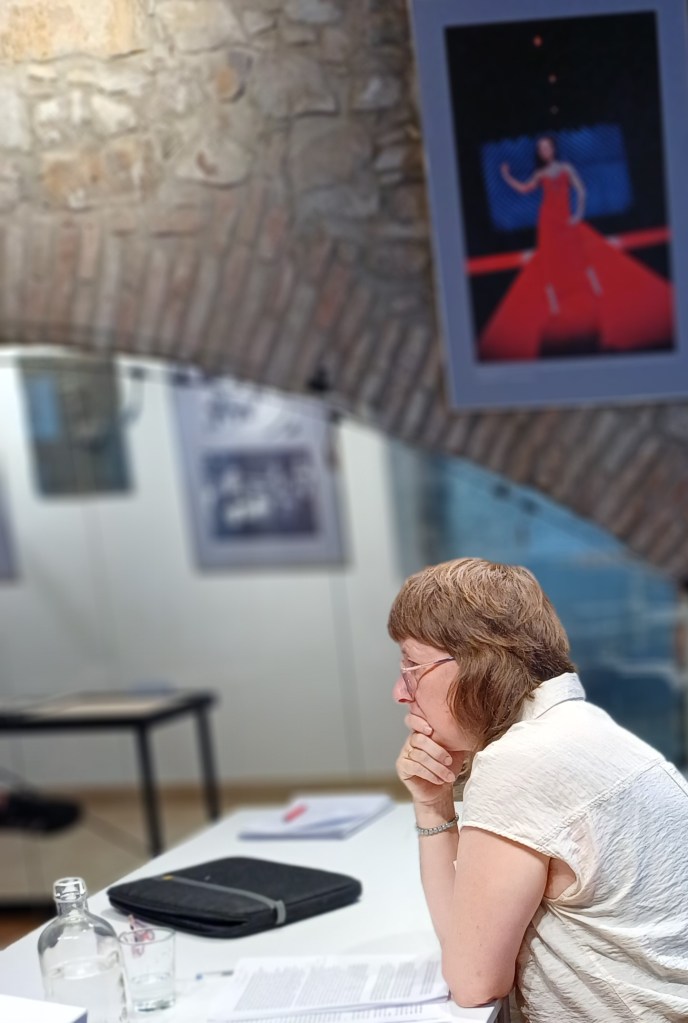
A roundtable titled “Brecht’s Legacy 70 Years On” brought questions of editing, translation and the transmission of Brecht’s work to the foreground. Moderated by Jakob Ribič, it brought together Aldo Milohnić, his fellow editor of the recent Slovenian translations of Brecht’s writings; Darko Suvin, the internationally renowned Brecht scholar and professor emeritus at McGill University; Tom Kuhn, who replaced Noah Willumsen; and Erdmut Wizisla, former director of the Bertolt Brecht Archive and current director of the Walter Benjamin Archive. The combination of editorial, scholarly and archival expertise offered a valuable opportunity to consider how Brecht’s writings reach new readers and how editions and translations shape the understanding of his legacy.
Friday opened with Bojana Kunst, performance and dance theorist, professor at Justus Liebig University Giessen and director of its international MA programme in Choreography and Performance, delivering her compelling keynote, “When We Can No Longer Even Speak of Trees: Brecht and the Risk of Speaking the Truth.” Drawing on Lina Majdalanie and Rabih Mroué’s A Roof and Four Walls, Kunst examined how political conflict can make even ordinary memories and personal experiences contentious. By asking whose speech is heard and recognised as legitimate, she gave the conference’s concern with truth a sharp contemporary focus, opening challenging questions about artistic freedom, political belonging and the vulnerability of migrant artists. Panels continued with discussions of estrangement and spectatorship, institutional and alternative approaches to theatre, and Brecht’s connections with literature, music and radio.
Jani Kovačič closed the academic proceedings with a musical presentation asking what Brecht had taught us. Participants then travelled to Anton Podbevšek Teater in Novo Mesto for The Life and Times of Bertolt Brecht. Directed by Matjaž Berger, with music by the duo Silence and choreography by Gregor Luštek, the production approached Brecht through his multiple roles as writer, director and theatre reformer. A farewell reception concluded the programme.
The conference’s timeliness emerged particularly clearly in its engagement with right-wing and neo-fascist attacks on higher education and the arts, especially against those with the audacity to contradict the ideological fantasies of those seeking to control them. Wessendorf’s keynote brought this threat, and the urgency of responding to it, into sharp focus. Yet the proceedings also demonstrated the value of questioning received ideas within Brecht scholarship itself. Both Kuhn’s reconsideration of empathy and the panel on Brecht and Aristotle showed how revisiting familiar conceptual oppositions can open new possibilities for understanding and using Brecht today.
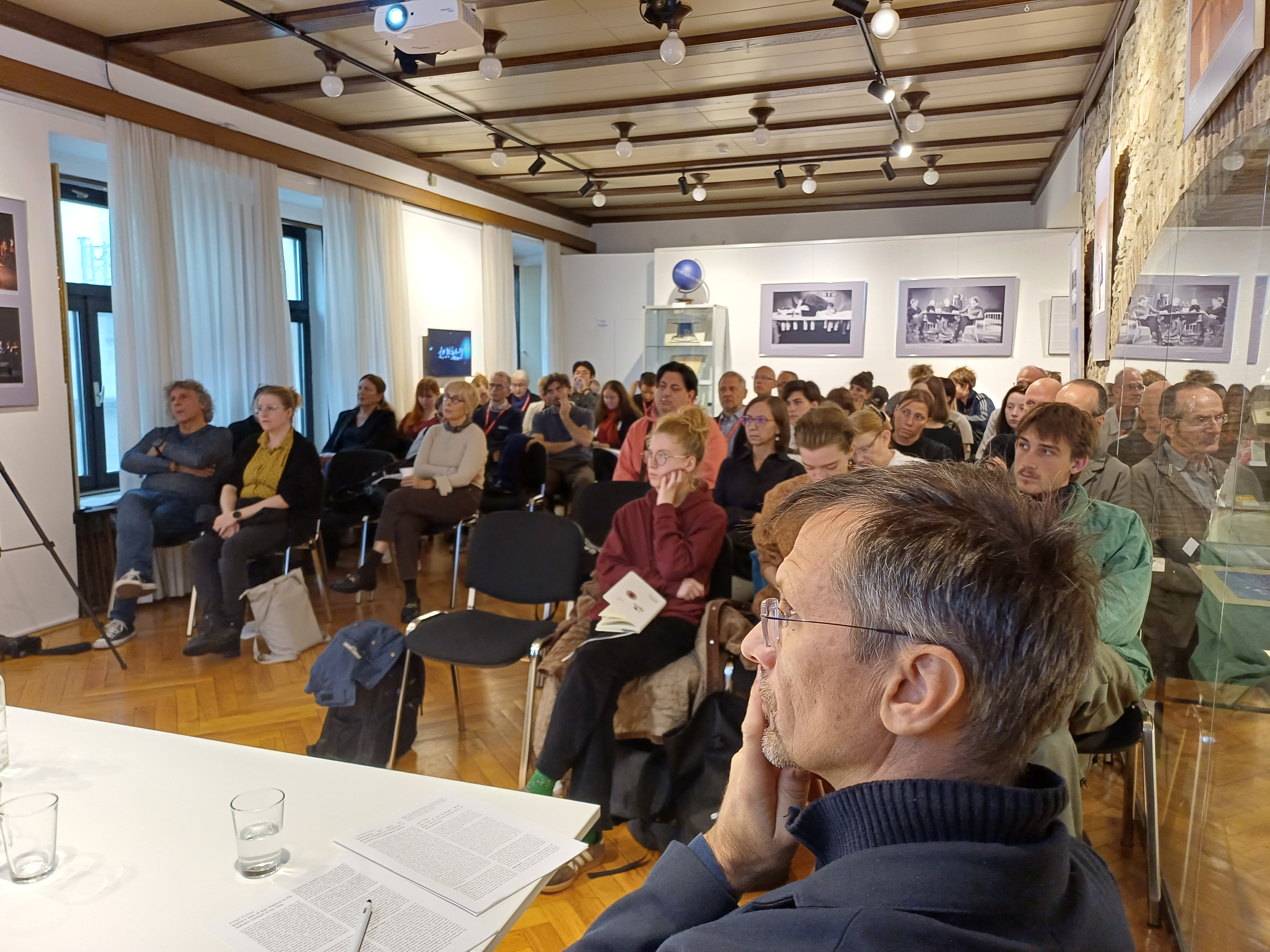
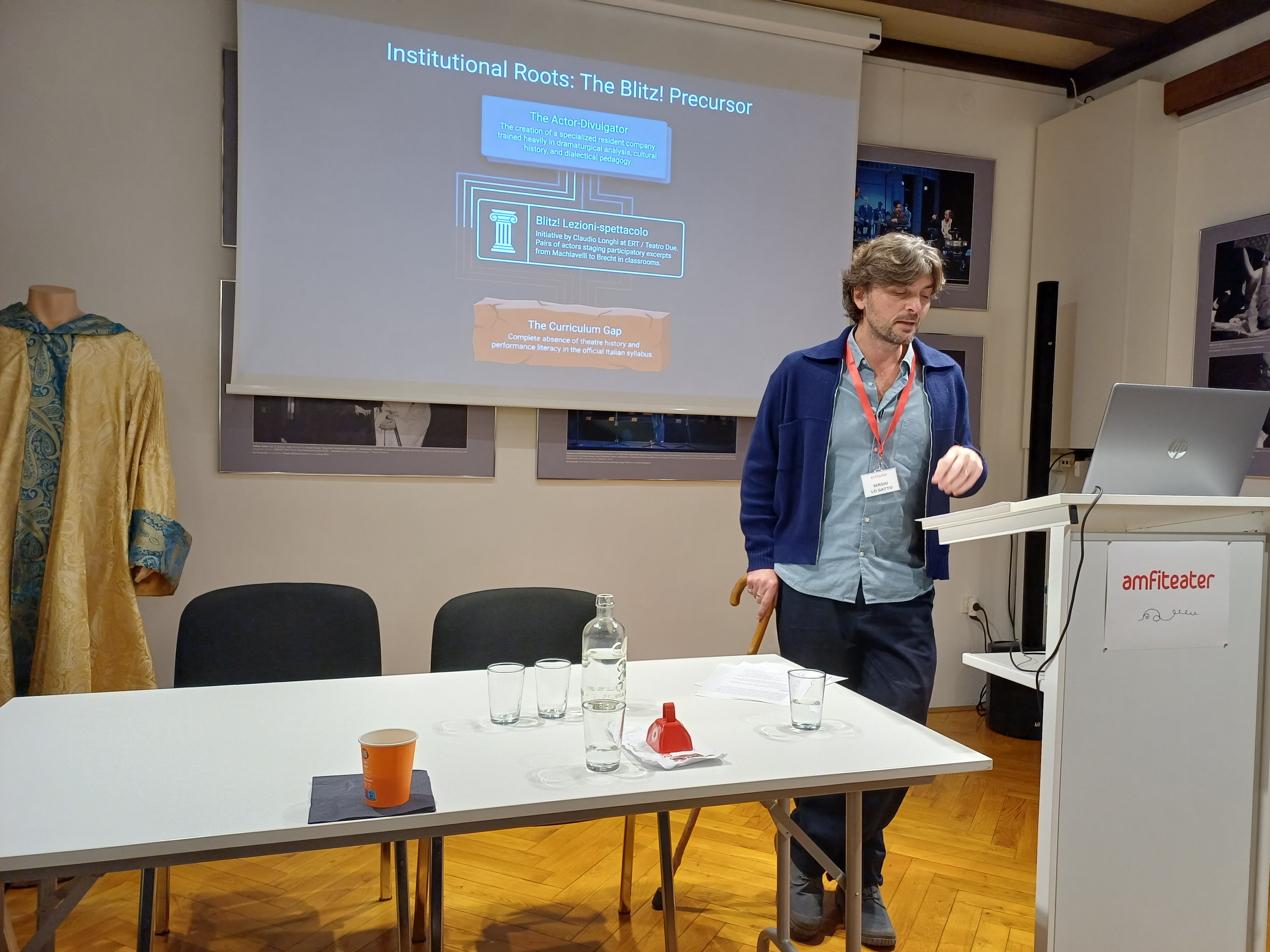
Across the programme, the sessions were consistently strong, the papers thoughtfully combined and the discussions lively. The exhibitions and performances made the cultural programme an integral part of the intellectual exchange. Overall, this was an excellent conference whose smaller format encouraged sustained conversations, valuable networking and a generous exchange of ideas among scholars and practitioners.