This year marks the 100th anniversary of the death of the great Slovenian poet Srečko Kosovel. To mark the occasion, the Government of the Republic of Slovenia has declared 2026 the “Year of Kosovel.” The celebrations have given rise to more than 100 cultural and artistic events across Slovenia dedicated to the young poet, who, despite his premature death at just 22, left behind an astonishing legacy. One of these events is Cosmos Kosovel, a major exhibition produced by the cultural and congress centre Cankarjev dom. Conceived as an extensive interdisciplinary project, it involves 20 partner institutions, including Slovenian and international galleries, museums and faculties. A guided tour of the exhibition formed part of the evening cultural programme of the international Brecht symposium Speech on the (Dark) Times: Brecht’s Thought Then and Now.
The exhibition was created in collaboration with the National and University Library of Ljubljana. Its curator, Marijan Rupert, was joined by a programme committee consisting of Kristina Pranjić, Mateja Kralj, Miha Colner, Boštjan Botas Kenda and Katarina Hergouth. Particularly interesting and inspiring is the involvement of a group of students (V. Đorđević, T. Gregorc, L. Hasić, T. Jaklič, J. Kranjec, A. Ločičnik, T. Topić, E. Urankar and G. Žnidarčič) from the second-cycle Interactive Design programme at the Academy of Fine Arts and Design of the University of Ljubljana (UL ALUO). They created the exhibition’s spatial and visual design and offered a contemporary perspective on Kosovel and his work.
Kosovel’s Cosmos
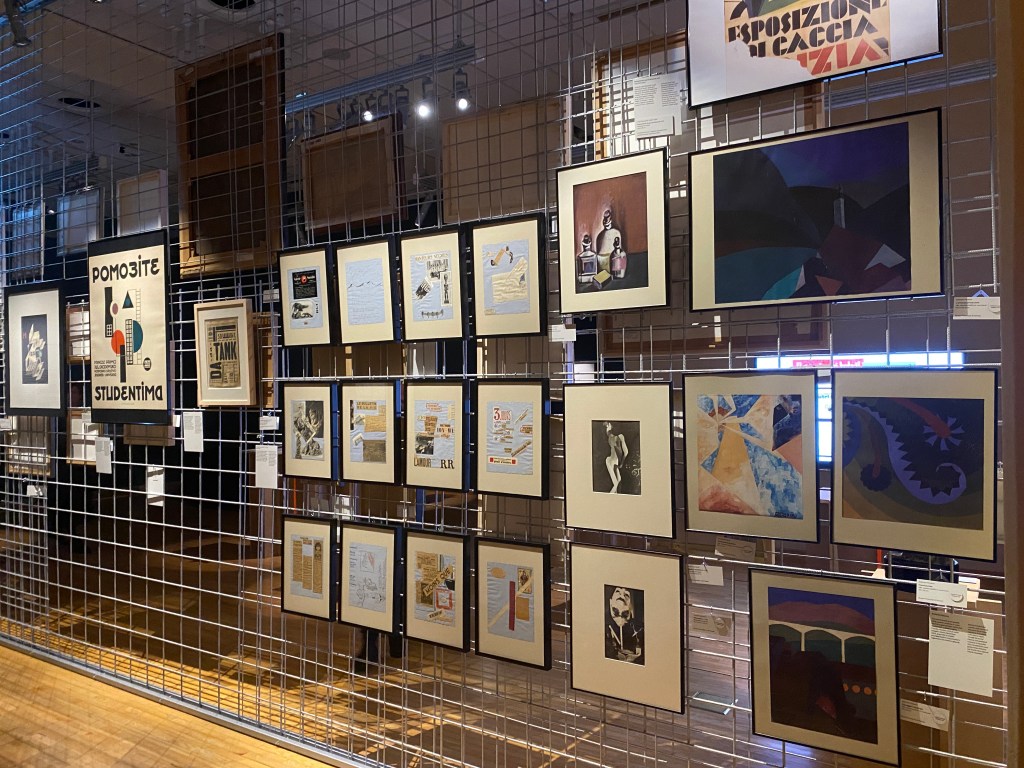
The spatial design conveys both the intimacy and the overwhelming vastness of the poet’s intellectual cosmos. Subdued lighting protects the original manuscripts on display while evoking an image of the poet’s spiritual world, stretching from personal warmth to a timeless universe. The UL ALUO students chose official forms as the exhibition’s central graphic element—forms that Srečko would often take from his father and use as paper for writing his poetry. As we proceed, we encounter a large metal grid that reflects the shape of these forms while also evoking a network of threads connecting Kosovel with other artists of his time and with us today, 100 years after his death.
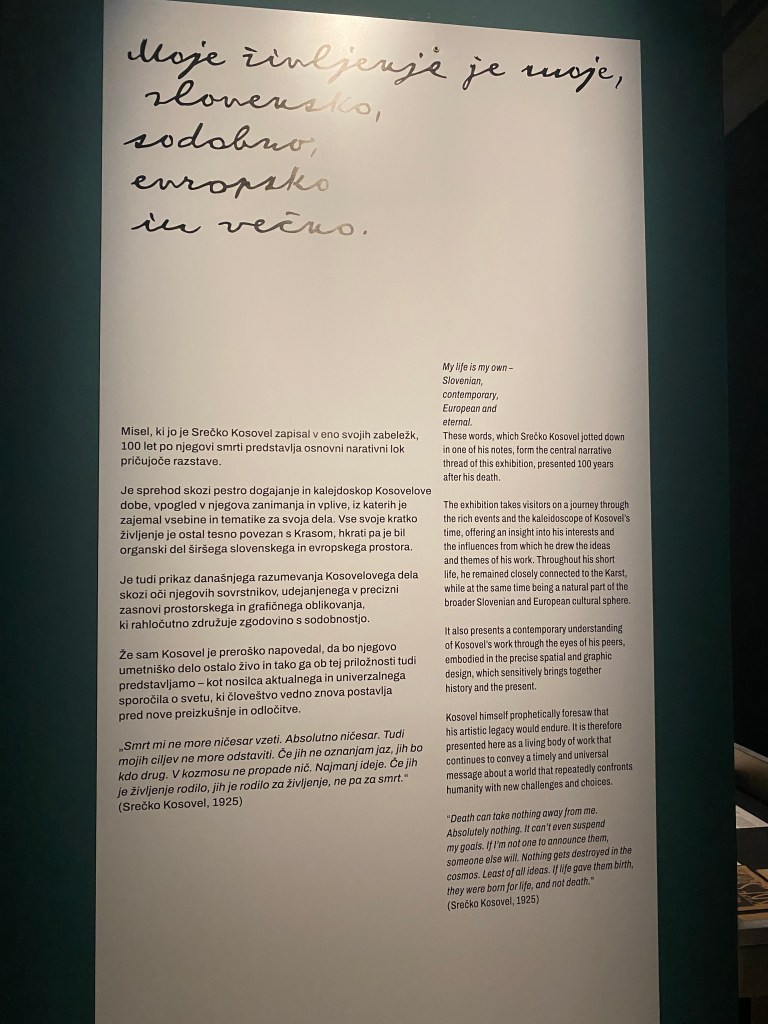
The exhibition’s central idea, which Kosovel recorded in one of his notes, invites us on a journey through his cosmos of ideas: “My life is my own, Slovenian, contemporary, European and eternal.”
My life is … my own
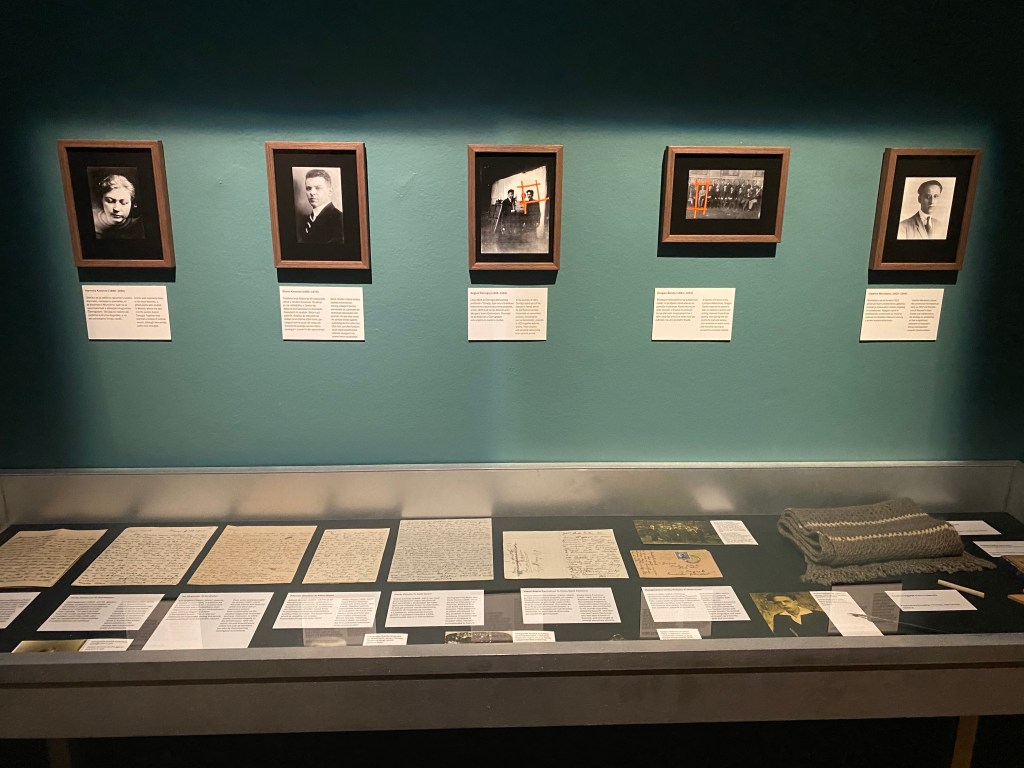
We enter the poet’s world through his “personal sphere,” reflected in objects on display, such as a cigarette and a scarf, as well as in works published during his lifetime. The wall also features an image of the Karst region in southwestern Slovenia, where Kosovel grew up with his family in the village of Tomaj. The region had a significant influence on his early work, which, like the first part of the exhibition, was personal and confessional in nature. Here we are introduced to the “sentimental young man,” as Kosovel describes himself in the preface to his unpublished collection The Golden Boat, as well as to his family, close friends and collaborators. The descriptions are accompanied by documentary material, including photographs, Kosovel’s manuscripts, the journals in which he published his work and audio recordings.
My life is … Slovenian and European
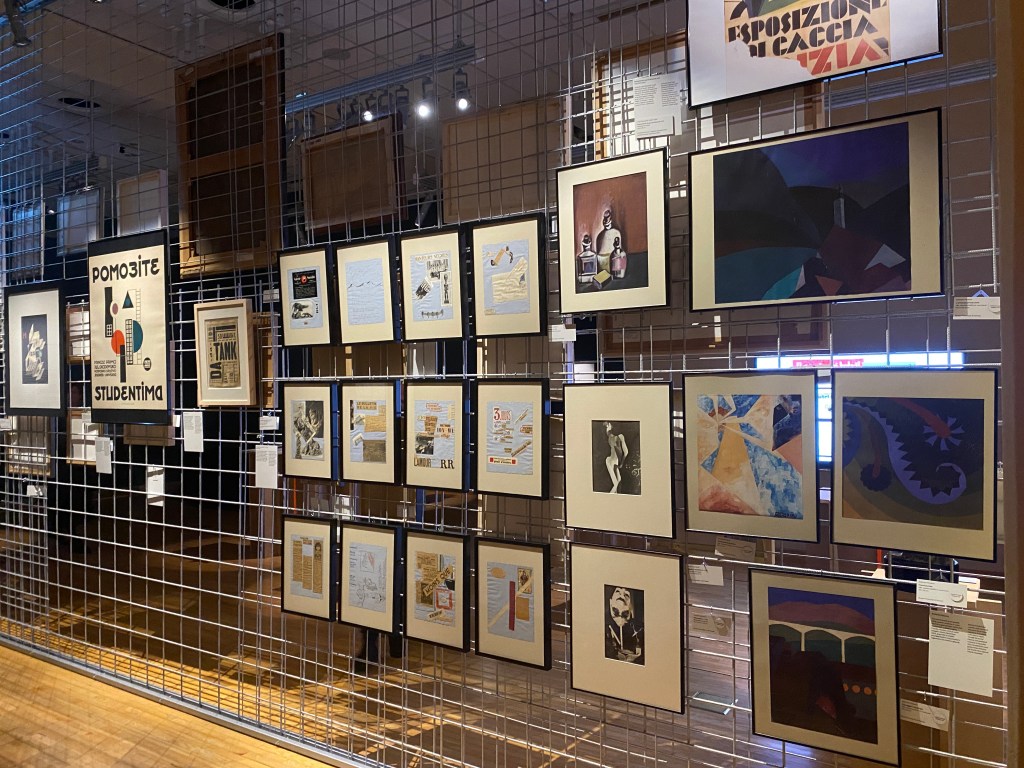
The next section takes the poet from the Karst into a broader Slovenian and European artistic and intellectual context. We encounter his literary inspirations, ranging from Slovenian literary modernism to the European avant-garde movements of Expressionism, Futurism and Constructivism. Here, the central visual element is again the metal grid, which represents the scope of Kosovel’s world. On one side, works by Slovenian avant-garde visual artists (France Kralj, Božidar Jakac, Ivan Čargo, Avgust Černigoj …) hang on this metal “wall.” On the other, we enter a wider European dimension, where works by artists of the Yugoslav avant-garde from Gorizia, Trieste, Belgrade and Zagreb are displayed. These include visual poetry by Marko Ristić and various Futurist and Zenitist journals (Zenit, Dada Tank, L’Aurora …).
My life is … contemporary and eternal
The final section is perhaps the most interesting, as it explores our contemporary relationship with the poet and his legacy. Its most prominent features are the students’ interpretations, which present Kosovel not as an idol, but as a contemporary who continues to communicate with us today. I would highlight two elements in particular. The first is a “reading corner,” where visitors can sit on one of two benches made of Karst limestone, conceived as a dialogue between the rawness of Karst stone and geometric form. There, visitors can browse the books on display, including Kosovel’s poetry, a graphic novel about his life and other publications.
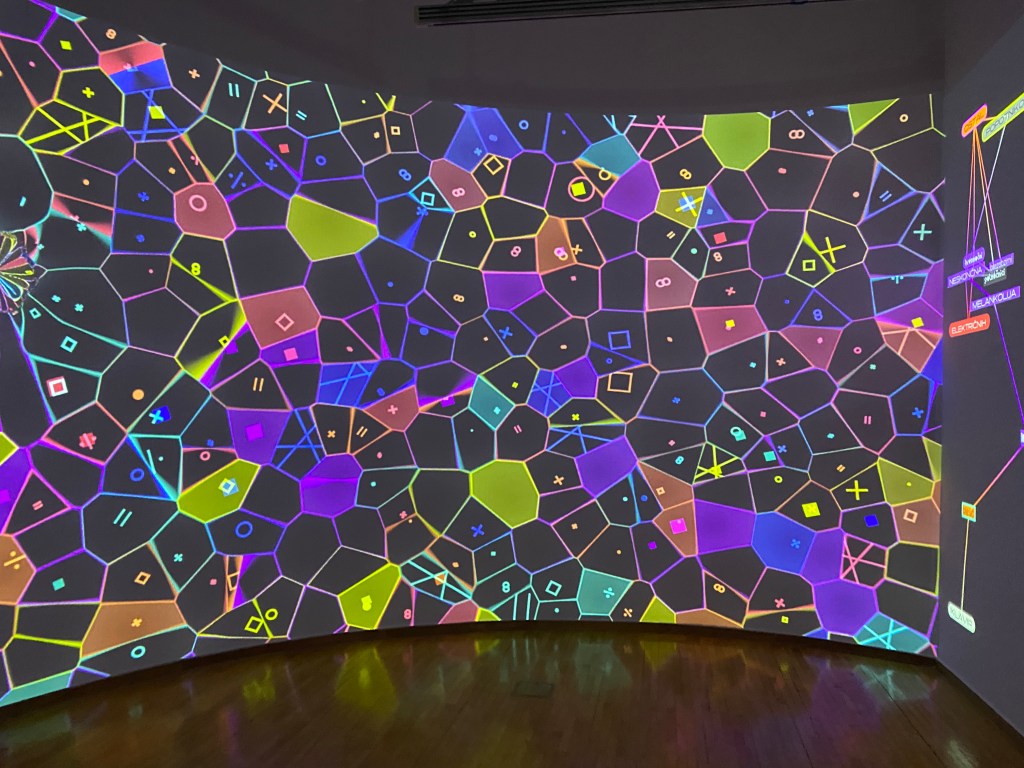
Visitors can also enter into a dialogue with the poet through an immersive projection in a dimly lit hall. Using the artificial intelligence system Claude, the UL ALUO students processed Kosovel’s manuscripts and analysed his poetic language. Based on the data obtained, they created an immersive generative image that responds to visitors moving around the space, bringing the poet’s key motifs, colours and symbols to life.
Kosovel in dialogue with Brecht
In addition to the Kosovel anniversary, this year marks the 70th anniversary of Bertolt Brecht’s death, providing a fitting context for the international symposium Speech on the (Dark) Times: Brecht’s Thought Then and Now. A guided tour of Cosmos Kosovel, led by curator Marijan Rupert and programme committee member Kristina Pranjić, formed part of the symposium’s evening cultural programme. The exhibition offered participants an opportunity to compare Kosovel and Brecht, who employed some similar creative approaches despite never having known each other.
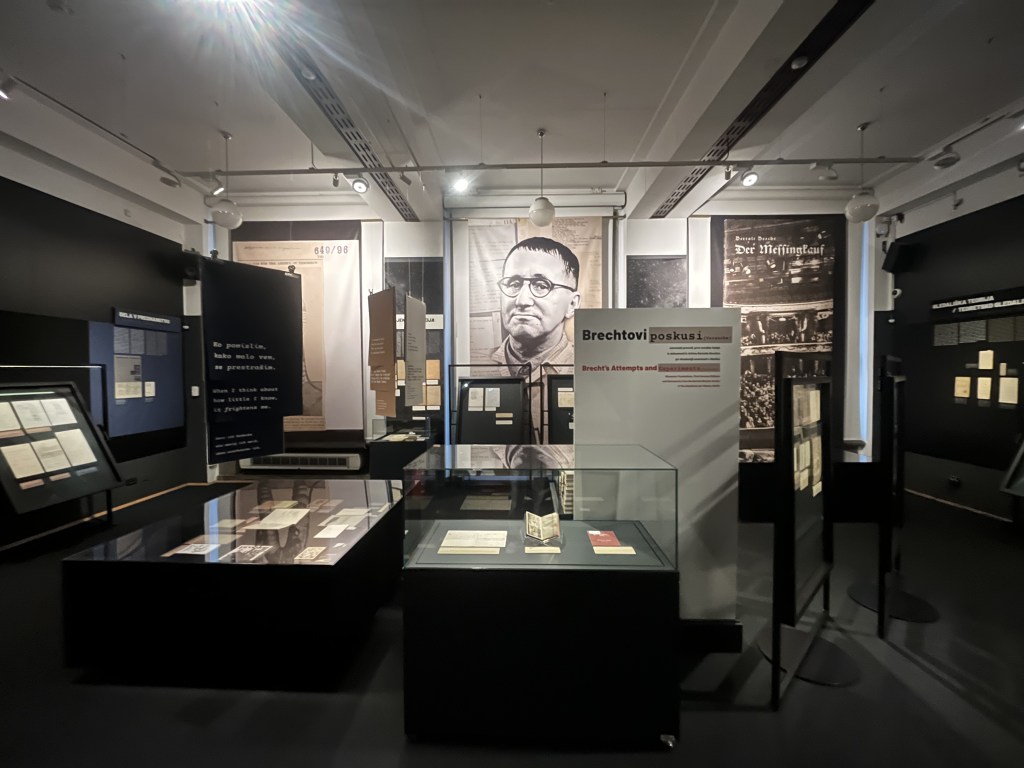
The strongest parallels with Brecht can be seen in Kosovel’s creative methods during his Constructivist period. Both Kosovel and Brecht cut illustrations, letters, headings and other material from newspapers, magazines, advertisements and posters, using them to create collages that fused content and form. For instance, Kosovel’s collages The Flying Ship, The Bomb and Mirrors, on display in this exhibition, could be compared with Brecht’s collages in Brecht’s Attempts and Experiments (Versuche) at the National and University Library.
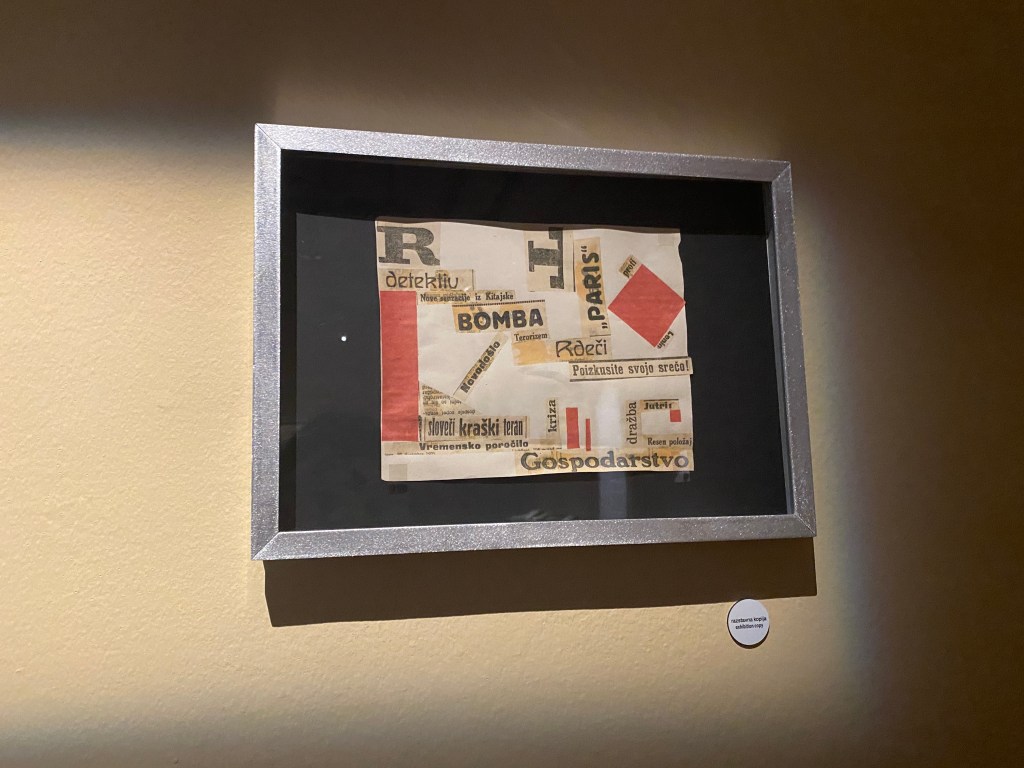
Both authors also demonstrated a distinctive social consciousness in their creative work. While this is consistently evident in Brecht’s work, it emerges most clearly in Kosovel’s during the final phase of his creative career, when, in the aftermath of the First World War, he emphasised the connection between art and social engagement. He expressed this particularly in his speeches to workers in Zagorje and Ljubljana.
Both Kosovel and Brecht experimented with and developed new forms of artistic expression during their lifetimes. Both were ahead of their time, while remaining relevant today.
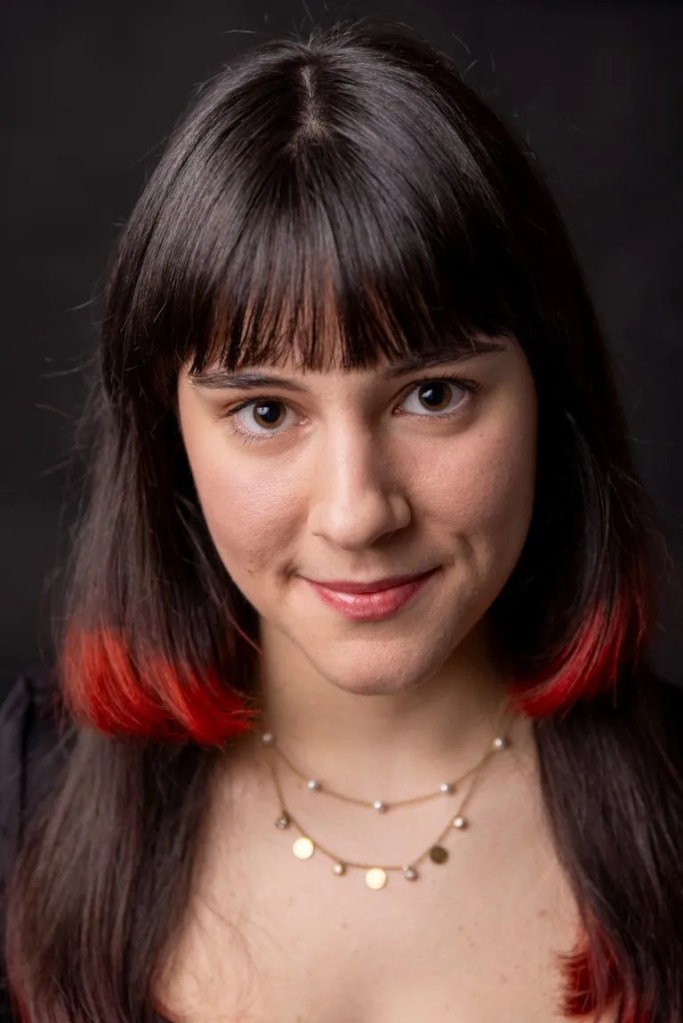
Karin Winkler is an undergraduate student of Dramaturgy and Performing Arts at the Academy of Theatre, Radio, Film and Television, University of Ljubljana. She is a member of the team at the Scaramouche Institute, which focuses on the development of comedy and comedic practices. She collaborated with the Slovenian National Theatre Nova Gorica on the production One Night in Zagorje. Her play G59 received the Zlatolaska Student Award.
Exhibit photos by Karin Winkler. Portroit by Fabris Šulin.